http://www.ShopCurious.com/ http://twitter.com/ShopCurious
Showing posts with label art nouveau. Show all posts

Thursday, 19 May 2011

Flying back in time, Aesthetic style


Last year’s Chelsea Flower Show brought out the bees and the bugs, though I didn’t see any dragonflies – apart from our Art Nouveau style brooch. This year, we’ve another dragonfly brooch at ShopCurious, with more of an arts and craftsy feel…Curiously appropriate in view of the Cult of Beauty exhibition, currently showing at London's Victoria and Albert Museum.


A whole host of Aesthetic themed events around town are cashing in on the popularity of the show. Last night, I popped down to a preview of Liberty’s annual Arts and Crafts exhibition at their Regent Street Store, held in association with specialist dealer, Patch Rogers.

The pieces on offer include Aesthetic furniture, books and objets d’art – all the sorts of things that would have been available at Liberty & Co when they were originally produced.


Some of the items were a little out of my price bracket, like this edition of Salome by Oscar Wilde, illustrated by Aubrey Beardsley. Apparently, Wilde dedicated his play to Sarah Bernhardt, who appeared in private performances of the banned production, in London and Paris.


Slightly more reasonable was this stylish Aesthetic movement panel in its original oak frame, dating from around 1895.

And, talking of dragonflies, some motifs appear more widely than others on the items – like the peacock, an ancient icon of beauty that’s often seen on antique Persian ceramics. The totemic symbols of the V&A exhibition, sunflowers and lilies, are also very much in evidence.


As for social butterflies, there was another rather more happening event at the store last night, where designer Richard Nicoll (right) held court over a fashionable crowd of shoppers etc, including the likes of Henry Holland.

Thinking of the dragonfly, symbol of enlightenment and freedom, reminded me that the Aesthetic movement was based upon a feeling that the world was becoming increasingly ugly and commercial. Artists of the time were looking for something fresh and more naturally beautiful…

Are you?

Saturday, 29 May 2010

Nature's rare accessories


The tree of knowledge, eh? At Chelsea Flower Show a wicker sculpture (the sort of thing you might see festooned with tempting floral treats in a department store), formed the centerpiece of a ‘biodiversity display’. The aim: to seduce the public into doing anything and everything to encourage insects and birds to visit their gardens. However, only certain plants and flowers appeal to butterflies and bees... and possibly not the likes of this strangely inventive creation.

These days, all ‘great ideas’ seem to require celebrity endorsement. The tree of knowledge was no exception, with luvvies like Jeremy Irons and Greg Wise offering their penny’s worth. Mr Wise even penned a rather luvverly poem, imploring us to ‘be less tidy’, ‘let things rot’ and ‘embrace decay’. Cheers, Greg!


My favourite gardens are invariably where the wild things are. A stunning entry at the show was L’Occitane's Provencal garden with its luxurious lavender beds – great for bees… plus wonderfully gnarled olive trees and ruggedly unadulterated rocky terraces. M&G's traditional English garden was nice, and, I suppose, guaranteed to be a winner – being the show's official sponsor and all of that.


And Leeds City Council's garden, sponsored by Hesco Bastion, was awesomely overgrown, with the rather contrived addition of a model canal lock (I can’t imagine that was entirely cast from eco-friendly materials?)

Anyway, seeing these delightfully unkempt plots reminded me that the winged insect I haven’t seen much of in recent years (despite living by the river) is the dragonfly. Dragonflies apparently gobble up all manner of curious bugs, okay they eat some butterflies and bees too - but also mosquitoes, which could come in handy with global warming. They’re curiously colourful as well, and imbued with symbolism and cultural significance in many parts of the world.


At ShopCurious, we’ve been promoting the benefits of naturally beautiful things for ages, which is why we’ve got plenty of nature inspired jewellery and accessories on offer - this unique Art Nouveau style dragonfly brooch being the perfect example.

Knowledge may be a dangerous thing, but birds and bees are a safe bet any day. I reckon seeing a few more dragonflies might be good news for biodiversity too.

Do you?

Friday, 10 July 2009

Hot colour hits Henley


Finally got around to sorting out all the photos from the many events I’ve been to in the past couple of weeks. One of the most colourful has to be Henley Royal Regatta. Last year I photographed lots of brightly coloured men’s blazers, so I thought that this time I’d give the girls a look in. Curiously, they didn’t seem to be nearly as colourful as the men (pics to follow later), though I did see a few arty outfits:

I loved Sue’s green and pink ensemble (left), which she said was purchased at a small boutique in central France. She’s obviously creative, since she decorated the hat to match, using a scarf that came with the outfit. Looks really quirky and unique, but rather stylish too, don’t you think? Elsewhere, eco-friendly green was also in evidence, as in this simple, but casually elegant outfit worn by Kirsty (right).


Chain store chic was also present in the form of a Karen Millen dress (and shoes) worn by Emma, right. Vivid colours can work well on a hot summer’s day - and when the sun did eventually come out, it was absolutely sweltering. Another girl I snapped (left) must have been anticipating the good weather – in fact she looked like she’d have been more at home at a Hawaiian beach party than a right royal rowing event on the river.


This year I also spotted quite a few art inspired multi-coloured numbers amongst the dresses – like Ann’s colourful Pleats Please creation by Issey Miyake, right. Katherine (left), whose father rowed for Great Britain, was wearing a geometric print maxi-dress.


Bright colours were certainly in abundance with plenty of reds, mauves, greens and blues. Julie and her mother, Audrey (right), definitely added a vibrant splash of colour to my day and I admired this polka dot red retro dress worn by Joan, who’d travelled all the way from New York to attend the regatta.


Although some dresses were duplicated, there were plenty of unique accessories - along with some very curious colour combos.


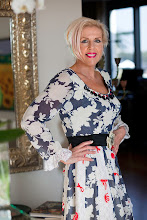
Jill’s dress and bag matched her green Henley badge (left) – as, inadvertently, did my grey-green floaty floral silk number, which I teamed up with Prada shoes, designer vintage YSL sunglasses from ShopCurious and some curiously clashing nail varnish to complete the look (see below).


Margot cleverly colour co-ordinated her art nouveau abstract patterned dress with matching accessories (above right).


This year I actually managed to see some of the races too - and that’s when a young lady’s foot caught my attention ... perhaps she was inspired by the ancient Greeks, or maybe she’s planning to row in the 2012 Olympics? I’m not really a big fan of tattoos, but this one seems appropriately cool for the occasion.

Are you?

Saturday, 18 April 2009

Powders and perfumes


It’s said that women started wearing heavy makeup in the 1920s to attract the attention of men, who were in much shorter supply after the First World War. Prior to this, wearing makeup was frowned upon, with pots of rouge and powder puffs being carefully hidden away from husbands and fathers - kept in underwear drawers and applied in secret. Ivory coloured foundation and bright red lipstick soon became the norm – and there were other inventive fashion trends:


For the eyes, in addition to mascara, ladies of the day used a toothpick to apply liquid wax to the ends of each eyelash, giving the impression of a row of tiny pearls. Eyebrows were often plucked out completely and then penciled back on somewhat higher up than nature intended. Other eye makeup included kohl - often made of ingredients like soot, lead, or goose grease – that was smudged all around the eyes, creating a look reminiscent of a vampire. The ‘vamps’ would sometimes add a dramatic line of kohl from the corner of the eye outwards to create a slightly Asiatic look that was considered sexy and bad.


For the face, powder made from rice gave the skin a very pale hue, referred to as “the pallor usually associated with innate vice” by one writer of the time. Portable makeup containers like powder compacts and lipstick holders were the stylish fashion accessories of the day, sometimes even made with precious metals, or encrusted with jewels. The styling for makeup products often took its inspiration from the Orient, like the unique and exotic vintage powder compacts at ShopCurious. Women of the twenties loved to apply their makeup in public at parties and at the dinner table in order to show off their beautiful and unusual compacts.


For the cheeks, red rouge was the order of the day, until advances in manufacturing produced new colours like orange. Girls who worried about the consequences of being found out for wearing makeup resorted to vigorous cheek-pinching instead.


For the lips, red was also the only colour available and was applied to create a ‘cupid’s bow’ above the upper lip. Lipstick often stopped short of the natural crease in the lips to minimize their thickness. Smudgeproof lipstick was essential for vamps who wanted to neck without leaving any evidence.


The invention of modern nail polish in 1920 made varnishing the fingers and toes very popular. Nails were usually worn very long and painted only in the middle, with the tip and cuticle areas left bare.

Of course, ladies also wished to smell beautiful. In 1921 Coco Chanel invented her timeless scent – Chanel No.5. Other scents of the time captured the passions of the age, like the desire to travel to far flung exotic lands that inspired the creation of Guerlain’s Shalimar.


Modern day perfumes, like those from L’Aromarine, successfully capture the memories and mystery of the era - and the art nouveau style bottles are rather chic as well. If you’re lucky, you might even find an authentic 1920s perfume bottle, like the one above, that will look great on your dressing table - these are also highly collectable and can be a great investment too.

Will you?

Sunday, 5 April 2009

Nouveau Victoriana


Blogs this month will have the theme of ‘faded glamour’, as I take a look at fashion and style from art nouveau to art deco. Let’s start in La Belle Epoque, the French named ‘beautiful era’, that began in around 1890, lasted until the First World War and was a period of unparalleled opulence and extravagance.

Fortunately, thanks to the likes of our beloved British treasure Top Shop, these days buying the latest fashionable designs (or at least good copies) isn’t confined to the super-rich, as it was in late Victorian times. However, if you’re looking for high quality, original vintage items from yesteryear, you’ll still have to pay a pretty penny.


At ShopCurious, we’re offering an authentic, museum-quality, dark mauve velvet and jet-beaded Victorian mantelet style cape – it’s in excellent condition and wouldn’t look out of place on the catwalks of 2009. What’s amazing about this piece is the extraordinary quality of craftsmanship and the ornate embellishment, as was characteristic of luxury items, available to just a select few at the time.


Not only is this cape a perfect example of its type, but it also has several trademark features:

- front tails, called lappets
- long moiré ribbon streamers at the back,
- a small peplum to accommodate the bustle of a typical Victorian dress
- decorative Spanish matador style epaulets called mancherons
- passementerie/jet and bead fringing in the Spanish matador style


The mantelet (a new and shorter form of cape) evolved from the earlier Victorian (and longer length) mantle cape. Around this time, fashion was very much in transition and was beginning to reflect the decorative style of art nouveau - with its flowing, organic lines and curved, corseted shapes.

This fine cape comes from Bond Street in London, where the fashions of the day were dictated by mature, matronly women like Queen Victoria and later Queen Alexandra - but a fabulously stylish, timeless and individual piece like this is the sort of thing that almost anyone could wear these days. You don’t have to look like Kate Moss …

Do you?
