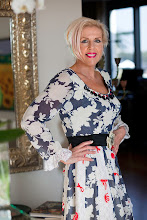
Love ‘em or loathe ‘em, fashion designers’ muses are often celebrity icons – actresses, singers, models, or well connected celebtocracy types. As Liz London’s pop-art style fashion muse inspired artworks are currently available at ShopCurious, I decided to take a closer look at the role of the celebrity muse.
Free clothing and accessories, plus masses of attention grabbing publicity are some of the perks of the muse’s job, but what must she (or, increasingly ‘he’) offer in return? Here’s my list of the top 10 requirements of a job spec. for musedom:
1) Beauty or aesthetic appeal
2) A ‘coat-hanger’ body to show off the latest designs
3) A large following, to get designs noticed
4) Wealthy friends, who might buy designer creations
5) Relationship issues – always good for extra publicity
6) A willingness to be re-styled every season
7) Some semblance of individuality for inspiration
8) An ability to walk in high heeled shoes
9) A good PR firm
10) A love of fashion, or a talented stylist.
We may well think it’s all air-heads and freebies, but celebrity fashion is hugely commercial, and even muses have to pull their weight (oops, did I mention weight?)
And, of course, there are some muses who fall outside this categorization - who have their own arty, eccentric, and curiously inspirational style, like the late Isabella Blow, Daphne Guinness and Lady Gaga.
Anyway, if you’ve got any additional points to add to the list, do let me know.
Will you?
Twitter Updates
Followers
About Me
- Susan
- Curiously crazy? Curiously creative? Curiously clever? A colourful curiosity? Are you curious?
My Blog List
-
dropshipper4 years ago
-
-
I'm back!11 years ago
-
New Word : ICONATOMY14 years ago
-
Total Pageviews
Links
- BLDG BLOG
- Cabinet of Wonders
- Colin McDowell
- disneyrollergirl
- Elizabeth Avedon
- Fashion Preserve
- fredbutlerstyle
- Godammit, I'm Mad!
- Lenorenevermore
- Luxe et Vanites
- Make Do Style
- Morbid Anatomy
- Nigeness
- Outsapop Trashion
- Pretty Portobello
- Profoundly Superficial
- Race Of Style
- Random Fashion Coolness
- ruminant
- Simply Healing
- Stella's Roar
- Style Bubble
- Style Porn
- The Spectator Arts Blog
- Think of England
- Thought Experiments
Tag Cloud
Style with brains.
Monday, 28 March 2011
Which muse to choose?
Wednesday, 24 November 2010
Illustrating the collectable vintage art of fashion...

There seems to be a sudden surge of interest in fashion illustration, with exhibitions popping up all over the place. There’s still plenty of time to visit the London Design Museum’s latest show – Drawing Fashion, a celebration of some of the best fashion illustrations of the 20th and 21st centuries, which runs until March next year. The show is guest co-curated by Colin McDowell, who is also hosting a series of fascinating talks linked to the event (check the website for details).
Nowadays, most fashion illustrations are the work of fashion designers, or specialist illustrators employed by design houses, or trend forecasters. However, in the days before photography and film became the accepted media for illustrating the latest catwalk looks, artists attended fashion shows to draw freehand sketches of the designs. One of the most prolific artists of the 1950s was Francis Marshall (1901-1980), who is especially well known for his coverage of the Paris couture shows – including the likes of Balmain, Balenciaga, Dior and Givenchy.
Marshall served as a midshipman during the First World War. Following his discharge in 1920, he spent three years at the Slade School of Fine Art. From 1928, he was employed as an illustrator for British Vogue. The 'Marshall girl', based on his wife Margaret, became a well-known figure in Vogue's illustrations.
After the Second World War, in which he served as a naval officer, he returned to advertising. He was also the principal social and fashion illustrator on the Daily Mail until the 1960s, covering the Paris couture shows on the newspaper’s behalf.


Some Francis Marshall memorabilia is currently stored by the Victoria and Albert Museum, including quite a number of fashion show invitations and programmes - as well as a charming letter to his wife from the Ritz Hotel (left), where he was staying to attend shows by Schiaparelli, Rochas and Jacques Fath.
His sketchbooks give a unique insight into his drawing style, ‘50s life and the work of a fashion illustrator. He made sketches wherever he travelled, and his drawings reflected his main interests: ballet, fashion, horses, London life, music, outdoor life, theatre and travel.
Marshall’s renowned book on Fashion Drawing is a source of many fabulous fashion illustrations, in addition to being an illuminating insight into the glamorous fashion world of the day. The book also serves as an invaluable source of technical advice, combined with fascinating historical detail.
If you'd like to find out more about the work of this talented illustrator, there's an original 1941, hardback edition of Marshall's book at ShopCurious. This would make a wonderful heirloom gift for a collector of fashion drawings, an aspiring artist, fashion designer, or any curiously creative type. The cover is in pretty good condition, considering its age, and only a few of the pages are slightly foxed.
Talking of which, if you can identify the illustrator of this picture over at The Dabbler, you could win your very own Christmas Fox…
Will you?
Sunday, 3 May 2009
Spin and save

As it’s a Bank Holiday weekend, I’ve decided to start the new theme for May next week. In order to fill in the gap, I thought I’d spin you a bit of a yarn – excuse the pun, but this blog is all about the lost art of spinning.
Did you know that the spinning wheel was a standard piece of equipment in the 18th century home? Until the Industrial Revolution, ladies would spin whenever they had the time – in fact it would seem to have been the main preoccupation of the dutiful housewife, whether rich or poor.
Spinning actually started long before this - the first tools used to spin thread were rocks, but a stick was later added to wind the fibre. This type of drop spindle was used to spin the threads for Egyptian Mummy wrappings – and we all know how style conscious the Egyptians were.
Amazingly, you can still buy an original antique spinning wheel today – in fact we’ve got a fine example at ShopCurious. There are many different types of spinning wheel, but every single one is individually handmade and unique. Spinning wheels aren’t simply useful, they look homely and are very collectable as ornamental pieces of furniture – they can even look stylish in a modern, minimalist setting. Plus, when the nights draw in, you can always ‘draw the latch’ and ‘sit by the fire and spin’ – now how eco-friendly is that?
I was reading that ‘the story of weaving is interwoven with the history of man’ – but surely this should be ‘woman’, since recorded history shows that weaving has always been almost exclusively a female occupation. Of course, it took a man to revolutionize spinning with, firstly the Spinning Jenny – usually attributed to James Hargreaves, and then the invention by Edmund Cartwright of the power loom in 1787.
However, the very essence of spinning is female – as documented in a wealth of mythology and folk lore. These days nothing is confined to one sex or the other, so if you’re so inclined, do feel free to weave away. It might turn out to be a useful cost-cutting exercise during the recession – and you could even take a leaf from Mahatma Gandhi’s book and try to help stimulate the economy by making your own cloth. I’m sure that budding fashion designers are already instantly inspired to take to the wheel? Just don’t expect anyone reading this to still be around when your first collection’s ready.
Will you?


