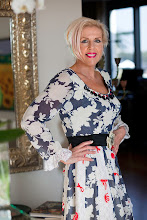
The 1920s heralded a new age of glamour and saw the beginnings of our ever-growing obsession with youthfulness. The fashion for face lifts started at this time and, in 1927 (according to the Literary Digest), New York based dermatologist, Dr Charles F Pabst, advocated legislation to save American women from the effects of their “frantic and artificial efforts to make themselves beautiful”.
He argued that “The skin of a civilized man – and woman – is a delicate organ, as delicate as the heart, which works 24 hours a day, adjusting the temperature of the body, keeping infection from entering. It requires little external aid except daily washing in lukewarm water with a mild soap…”
He continued…“ The French Government recently adopted a law…in the French colonies, against mutilating the skin by the barbarous scarring of faces, stretching of lips and slashing the body. For such practices, in which the savages indulge in their mistaken pursuit of what they consider beauty, the French now impose jail sentences and fines…” Pabst felt that the US Government should follow this example and pass a similar law to affect women undergoing facial surgery, only making the punishment much harsher – to account for the fact that “the American woman has civilization and education on her side and yet she indulges in more savage methods of mutilating her skin.”

It would be really fascinating to hear the views of any of the pioneering ladies who underwent face lifting procedures during the 1920s or ‘30s, though I doubt that many, if indeed any, are still alive today. I suspect that nowadays, if you can afford plastic surgery, it might be considered much more daring and individual to refuse to succumb to the surgeon's knife.
Meanwhile, there’s plenty of surviving evidence of the labours of past female beautification in the form of unique and timeless treasures from the Art Deco era. At ShopCurious, we’ve some fabulously stylish 1930s hand held mirrors and dressing table sets, as well as a vintage Art Deco manicure set in its original ruched-silk lined, papier mache box.
From the 1920s onwards, the first beauty parlours also started to appear. Prior to the '20s, it wasn’t thought at all proper for ‘nice girls’ to use cosmetics. By the way, if you’re curious to know more about authentic 1920s and ‘30s style makeup, I’ll be revealing some unusual non-invasive beauty secrets of the time in my next blog.
Are you?
Twitter Updates
Followers
About Me
- Susan
- Curiously crazy? Curiously creative? Curiously clever? A colourful curiosity? Are you curious?
My Blog List
-
dropshipper4 years ago
-
-
I'm back!11 years ago
-
New Word : ICONATOMY14 years ago
-
Total Pageviews
Links
- BLDG BLOG
- Cabinet of Wonders
- Colin McDowell
- disneyrollergirl
- Elizabeth Avedon
- Fashion Preserve
- fredbutlerstyle
- Godammit, I'm Mad!
- Lenorenevermore
- Luxe et Vanites
- Make Do Style
- Morbid Anatomy
- Nigeness
- Outsapop Trashion
- Pretty Portobello
- Profoundly Superficial
- Race Of Style
- Random Fashion Coolness
- ruminant
- Simply Healing
- Stella's Roar
- Style Bubble
- Style Porn
- The Spectator Arts Blog
- Think of England
- Thought Experiments
Tag Cloud
Style with brains.
Wednesday, 15 April 2009
Ageless Art Deco
Wednesday, 8 April 2009
Flapper flummox

With the London Marathon fast approaching, there’s something many participants will be worrying about – nipple chafing. The people I feel really sorry for are the celebrity participants because you can guarantee that, if they’re female, nine out of ten will have had breast implants.
That’s a real shame because it’s going to be rather difficult for them to replicate the authentic flapper look which is just about to become really hot (give or take a few years, as I always seem to be several trends ahead of what stylish people are wearing on the street).
Nevertheless, if you’re contemplating having the op, I’d give it a re-think as styles tend to change over time. What’s more, a friend of mine - who lives in LA and has assets to prove it - told me that, after her breast enhancement, she wasn’t able to go jogging for months on end. Apparently, over there, women’s clothing is specially designed to take account of the average Californian female’s unnaturally large breasts, which are totally out of proportion with the rest of her body. Meanwhile, back at the cutting edge, flapper fashions are making a comeback - and it seems that even national trend-setter Kate Moss (she of refreshingly natural looking boobs) is a big fan.
Did you know that, in the 1920s, bras, or brassieres as they were called at the time, were no more than bandeau style chest-flatteners, originally attached to a corset? Those with small breasts got away with wearing the fashionable camisoles of the time, but bustier ladies found themselves resorting to the scarily named Symington Side Lacer – a contraption that was laced at the sides to pull in and flatten the chest. It wasn’t until a bit later that bra cup sizes were introduced … perhaps something to take into account if you're thinking of investing in original 1920s fashion.
The word ‘flapper’ is originally a British term as it’s over here that it became the ‘in thing’ for young women to wear rubber galoshes, which were left open to flap when they walked. The flapper look as we know it was later popularized by Coco Chanel and other leading designers of the day throughout the United States and Europe. The term ‘flapper’ became synonymous with liberated young women. Flappers were bold, confident, and sexy. They tried faddish new diets in an effort to achieve a fashionable thinness, because new fashions required slim figures, flat chests, and narrow hips.
As it happens, the flapper dress was much less complicated than earlier designs and wasn’t the sole preserve of the moneyed classes. Skirt lengths in the ‘20s varied dramatically: they weren’t all short and, contrary to popular belief, the women weren’t all incredibly skinny either. Although the fashion was for dresses to be loose fitting, the straight skirt style of flapper dresses is fairly timeless and actually suits most people – what’s more, at ShopCurious, we’ve got some beautifully beaded original vintage examples in UK sizes from 6 to 16.
Flappers are notorious for rejecting strict Victorian rules and representing everything new about women – smoking, wild dancing, short bobbed hair, brightly coloured lipstick, reckless behaviour and male attitudes. In the early 1900s, women started to work alongside men for the first time and to move away from the role of being purely mothers and housewives.
Of course, all of this ended with the Great Depression.
In terms of fashion styles, whatever their optimum bust sizes, it seems we’ve turned full circle many times. With all the changes that are going on in the world at the moment, I’d love to know where we’re headed next - and I’m not just curious, I’m totally flummoxed. Perhaps we should just slow down, recycle, re-use and give ourselves time to reevaluate … and maybe even accept ourselves the way we are.
Will you?


