http://www.ShopCurious.com/ http://twitter.com/ShopCurious
Showing posts with label collecting. Show all posts

Tuesday, 29 January 2013

Ordinary icons? Stories of modern design


What started as a Boiler House Project in the basement of the V and A, organized by Design Museum founders Stephen Bayley and Terence Conran in the mid 1980s, was originally conceived as a pioneering ‘pop up’ museum.  But London’s Design Museum has ended up storing several thousand items, which will become a permanent display when the Design Museum’s new Kensington premises open in 2015. The entire top floor will be dedicated to icons of 20th century design in a free-entry exhibition.  Meantime, from tomorrow, a snapshot of the permanent collection that will be on show can be seen at the current Shad Thames location. 150 items from the Design Museum’s collection feature in the exhibition: Extraordinary Stories About Ordinary Things.


We mentioned the trend towards ‘immortalization through fashion’ in a previous Curious Trends post - and, for lovers of fashion, this show includes a sample of some of the 400 pieces donated by Design Museum trustee, Jill Ritblat. Her generous gift contains items by many of the world’s leading designers, including Karl Lagerfeld, Issey Miyake, Ungaro, Belville Sassoon and Vivienne Westwood, spanning a period from the 1970s to the end of the 1990s.


The exhibiton showcases an eclectic mix of artefacts, but the fashion pieces on loan for this show - including a Victor Edelstein satin brocade dress and a Jet Set of St Moritz ski suit - are fairly middle of the road in terms of style.

These aren’t necessarily the sort of designs that would have inspired or transformed the habits of a generation, unlike the original iMac, the red telephone box and the Bic biro, which are also featured.


At a press briefing, Design Museum Director, Deyan Sudjic, was at pains to point out that fashion isn’t just frivolous – it’s functional, and a contributing part of the economy too.  “Design is not the same as art,” he also said. So where does art stop and design begin… or vice versa. And what exactly is ‘design art’? I’m curious to know.


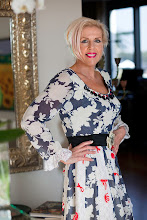
PS  Why not add to your own fashion collection with this curiously classic designer vintage Belville Sassoon dress from ShopCurious...

Sunday, 18 November 2012

Arty objects of death


It’s not what you’re thinking… This giant chandelier called In the Eyes of Others was created by John Carey in 2009. The mixed media piece is made from plaster, steel, wire, cardboard boxes and newspaper – with not a bone in sight.


The Argentinian collective Mondongo is named after the word for traditional Argentinian tripe stew. Their curious collages combine everyday objects to create three dimensional artworks. This 2011 work called Calavera is made from Plasticine on board. 


Neo classical architecture has been chosen to represent the economic and cultural dominance of Europe and the USA over Argentina’s villa miseria or shanty towns.


These works are some of the more recent of 300 items from the collection of Richard Harris, currently on show at the Wellcome Collection’s Death: A Self-Portrait. Read more about this curiously fascinating exhibition in ShopCurious’s latest Curious Trends post – and have your say in our discussion on objects of death at The Dabbler. 

Wednesday, 9 May 2012

Crowning curiosity?


Did you know that the Imperial State Crown travels in its own carriage (along with the Cap of Maintenance and the Sword of State) ahead of the monarch to the State Opening of Parliament?


You may have spotted this crown today, being worn by The Queen, as she led the procession through the Royal Gallery to the House of Lords for the official occasion.


Prior to decimalization, a crown also used to be a coin (worth five shillings in old money) - before it was reissued as a 25p piece. A new £5 crown was issued by the Royal Mint from 1990, and a special Diamond Jubilee coin in this denomination is now available.

Sadly, the half crown coin (as shown here), was discontinued in 1970, though the 10p coin looks rather similar.


Anyway, old or new, most coins are still worth collecting - at least for the moment…
 
So, whether you’re a budding numismatist, or just saving up for a rainy day, how about this curiously collectable 1953 coronation souvenir crown-shaped money box from ShopCurious?
 
I think this characterful vintage heirloom could prove to be quite a good investment in its own right – though unfortunately you won’t be able to wear it.


Will you?

Friday, 13 April 2012

Vintage poetry in motion


Those of you who are curious may have been wondering which horse won the Grand National in 1953, the year of The Queen’s Coronation? I can confirm it was Early Mist, as pictured jumping a hedge in this photograph.


60 years on, and ShopCurious has some collectable cufflinks that are roughly the same vintage as this race. The best thing is that they don’t seem to have dated at all – in fact, they’re curiously timeless. So, men, if you’re looking for something unique to wear to the races, or perhaps for the Diamond Jubilee celebrations this year, then look no further.


But before that, I’m looking forward to watching the race at 4.15 tomorrow afternoon. It’s pretty dangerous for riders and horses alike, so if you’re squeamish may I suggest some equine inspired poetry instead? Our poet in residence, Matt Bryden, has provided just the thing:


Collecting


The eyes before opening let in
bird-song, the six different strategies
for approaching the day. Before ten

one is not mature mentally or physically.
Nice paces, though a slightly weak stifle.
There are ways and ways;

inside the house
don't wear a jacket, for example;
in pjs, walk the gelding from the stable.

I expect you’re wondering what collecting has got to do with horses…

Are you?

Tuesday, 4 October 2011

New antiquarian style


A growing fascination with curiosities and collecting means antique style clothing and accessories are starting to appear everywhere. Judging by some of the fashions seen on catwalks, we’re about to experience a Miss Havisham inspired phase of dressing.

Dishevelled Dickensian drapery, curious hats and quirky accessories, old fashioned curiosity brooches, bejewelled and beringed gloves will feature.


Miss Havisham’s look is available at ShopCurious. From great-grandmother style brooches to Victorian photographs in curiously collectable union cases, check out our unique selection of vintage memorabilia and curios.

Will you?

PS And embellishment will be everywhere – see our latest Curious Trends post.

Sunday, 25 September 2011

Contemporary curiosities


The pop art and punk of postmodernism have morphed into a new (albeit retro-progressive) age of crafting and collecting.

But what started out as a genuine curiosity for naturally beautiful, or unusual, things and their provenance has become something of a preoccupation with packaging rather than content. Have you noticed how so many things appear inside domes these days – or encased in resin?

And what constitutes a curiosity anyway? Just because something’s unusually large, or very tiny does that mean it’s especially unique or valuable?


Postmodernist media-led consumerism segued into the electronic age of the internet – so will the new age of rummaging for ‘found’ objects, and recycling, pave the way for another reinvention of communications networks and social structures?

ShopCurious spotted some curiously crafty postmodernist-influenced creations at the London Design Festival - Tine De Ruysser’s bank note jewellery and wall art amongst them. But, beyond postmodernism, is there room for a whole new exchange mechanism - something like a bartering based economy? Will money itself eventually become something of a curiosity?


Latest trends aside, we seem to be moving into uncharted territory. I have a feeling that our lives are about to become a lot more curious…

Do you?

Tuesday, 6 September 2011

Fancy a crafty cuppa?


When you've been away on holiday, it’s always nice to come home to a freshly brewed cup of tea. Tea has a calming effect, helping us slow down and reflect on things - rather than worry about all the stuff we've got to do, and how little time we've got to do it in.

You wouldn’t necessarily think of tea as being a particularly racy drink – but, curiously, the humble cuppa has never been so sexy. Vintage style tea parties seem to be taking place everywhere – a book has even been published on the subject. And more and more people are collecting old china – especially painted teacups and unusual teapots.


If you’re a bit of a teapot fancier, you might like to visit Norwich Castle Museum, where the Philip Miller collection of 2000 pots is housed. This was brought together to include the work of as many different English factories as possible, and is the largest specialist collection of teapots in Britain.


Alternatively, take a look at some of the handcrafted, collectable teatime treats in ShopCurious’s latest Curious Trends post – and you’ll see what I mean about tea drinking’s saucy new image…

Will you?

Friday, 1 April 2011

Animal instinct and curiosities of human nature


Us humans have a strange affinity with animals – on the one hand we keep them as pets, but on the other, we eat them. Still, we like to think of animals as our friends - after all, they are our distant relatives – and this is increasingly evident in our treatment of all creatures great and small, especially in design art and home furnishings.


Along with our recreations of wild beasts in wood, clay and papier mache, come those in cotton and wool – yes, animal inspired clothing and accessories are appearing everywhere too.


An even more curious trend is our growing desire to share our homes with dead animals in the form of vintage taxidermy.


If you’re a little squeamish, you may prefer something a little less realistic, like this curiously collectable Japanese style, blue-glazed, retro ceramic monkey family from ShopCurious (below).


Alternatively, you may wish to feast your eyes on the fine collection of stuffed animals at the Musee de la Chasse et de la Nature in Paris, reviewed in my post today at The Dabbler.


Do you?

Saturday, 27 November 2010

Sticks, stones, beasts and bones


This weekend, I thought it would be fun to focus on a curious new trend I spotted: primeval style. So let’s travel back to the distant past - to the dark ages and the very basics of the primordial lifestyle…

You may have noticed that ancient crafts have begun to re-emerge in design, so we’re seeing things like basket weaving, roughly carved wooden furniture, primitive looking skin and stone home accessories, along with age old decorative techniques, such as marquetry.


Unfortuately, the Primal Scream concert at London's Olympia tonight is already sold out. But you can take the opportunity to dine out in proper primeval style instead: Just pop along to Jamie Oliver’s new charcoal grill restaurant, Barbecoa, where the service is certainly bordering on the Neolithic - though the chefs somehow make even the simplest of ingredients taste utterly divine.


If you’re into collecting, you’ll have already noted the current fascination with old techniques and processes. This weekend, Albert Watson is in town for the launch of his vintage photography exhibition at Hamiltons Gallery in Mayfair, selling a selection of his most famous silver gelatin and Polaroid prints.


Watson’s photographs include this shot of Mick Jagger as a leopard, which definitely captures man’s basic animal instinct. And another, of the back of Mike Tyson’s freakishly wide neck. Incidentally, Albert Watson’s father was professional boxer, who told him that the most important thing for a boxer is to have a strong neck.


Moving swiftly on, for The Last Tuesday Society’s winter show, opening today in Hackney, Alice Herrick & Viktor Wynd, will transform the gallery into a Rousseauesque jungle “representing a contemporary Bestiary... regal beasts, enchanted forests, curious creatures and bejewelled nature. The centre of the gallery will be filled with a menagerie of taxidermied animals, from giraffes and polar bears to lion and tiger skeletons.”


For lovers of authentic primitive style, we’ve also got some rather primal curiosities of nature online, at ShopCurious – ranging from stone lizard pendants to genuine frog purses.

And, finally, don't forget to check out the curiously bestial headwear in my latest post at The Dabbler – just in case you feel like unleashing your inner caveman (or woman) this Christmas.

Do you?

Wednesday, 24 November 2010

Illustrating the collectable vintage art of fashion...


There seems to be a sudden surge of interest in fashion illustration, with exhibitions popping up all over the place. There’s still plenty of time to visit the London Design Museum’s latest show – Drawing Fashion, a celebration of some of the best fashion illustrations of the 20th and 21st centuries, which runs until March next year. The show is guest co-curated by Colin McDowell, who is also hosting a series of fascinating talks linked to the event (check the website for details).


Nowadays, most fashion illustrations are the work of fashion designers, or specialist illustrators employed by design houses, or trend forecasters. However, in the days before photography and film became the accepted media for illustrating the latest catwalk looks, artists attended fashion shows to draw freehand sketches of the designs. One of the most prolific artists of the 1950s was Francis Marshall (1901-1980), who is especially well known for his coverage of the Paris couture shows – including the likes of Balmain, Balenciaga, Dior and Givenchy.


Marshall served as a midshipman during the First World War. Following his discharge in 1920, he spent three years at the Slade School of Fine Art. From 1928, he was employed as an illustrator for British Vogue. The 'Marshall girl', based on his wife Margaret, became a well-known figure in Vogue's illustrations.

After the Second World War, in which he served as a naval officer, he returned to advertising. He was also the principal social and fashion illustrator on the Daily Mail until the 1960s, covering the Paris couture shows on the newspaper’s behalf.


Some Francis Marshall memorabilia is currently stored by the Victoria and Albert Museum, including quite a number of fashion show invitations and programmes - as well as a charming letter to his wife from the Ritz Hotel (left), where he was staying to attend shows by Schiaparelli, Rochas and Jacques Fath.


His sketchbooks give a unique insight into his drawing style, ‘50s life and the work of a fashion illustrator. He made sketches wherever he travelled, and his drawings reflected his main interests: ballet, fashion, horses, London life, music, outdoor life, theatre and travel.


Marshall’s renowned book on Fashion Drawing is a source of many fabulous fashion illustrations, in addition to being an illuminating insight into the glamorous fashion world of the day. The book also serves as an invaluable source of technical advice, combined with fascinating historical detail.


If you'd like to find out more about the work of this talented illustrator, there's an original 1941, hardback edition of Marshall's book at ShopCurious. This would make a wonderful heirloom gift for a collector of fashion drawings, an aspiring artist, fashion designer, or any curiously creative type. The cover is in pretty good condition, considering its age, and only a few of the pages are slightly foxed.

Talking of which, if you can identify the illustrator of this picture over at The Dabbler, you could win your very own Christmas Fox…

Will you?

Saturday, 20 November 2010

Trophy style


This week at The Dabbler, I travel back to the 1980s for some old school, trophy style. Preppy blazers and sporty attire were first popularized by Fred Perry, Lacoste and Ralph Lauren – and have recently been revived by the likes of Abercrombie and Fitch, Jack Wills and J Crew. Next season we'll be seeing a lot more preppy blazers on the catwalk, in the shops and generally around the streets.


But will the new preppy menswear trend mark a return to the rules of the old establishment, or is 'trophy dressing' just a curious reflection of the current craze for collecting sporting memorabilia?

Originally, trophies were won through academic achievement, or sporting prowess, though these days you can buy most things - including these curiously quirky, ready-mounted hunting trophies from ShopCurious (perfect for an arty arrangement on the wall of your ski chalet).


Funny how curiosities of nature, like animal skulls, have suddenly become desirable as as decorative works of art.

By the way, do you have any sporting trophies - genuine, or purchased.

Do you?
