http://www.ShopCurious.com/ http://twitter.com/ShopCurious
Showing posts with label 1970s. Show all posts

Saturday, 23 March 2013

David Bowie Is: Living curiosity and fashion legend


Peter Frankopan, a Historian at Oxford University, writing for Huffpost Culture, compares Bowie to a living saint: “I'll be packing off my students to see it - if they can get tickets, that is,” he says, “as it is the perfect example for anyone wanting to understand medieval religion. The record-breaking crowds that will flock to see the show will be like pilgrims visiting a shrine of an important saint: here is the outfit Bowie wore when he sang Starman on Top of the Pops; there are the lyrics, written in his own hand, for Rebel Rebel. There is the printed itinerary of the train journey across the eastern US, with stop-offs to the end of the line before the rest of the trip was by car and van. They are like relics belonging to a holy man, objects to be admired.”

You have to be pretty saintly to stand in a queue for an hour to see an exhibition  - and that was just on the preview day.  But it’s well worth it to see the costumes alone – many of them designed or co-designed by Bowie himself.

The fashion legend and living curiosity that is David Bowie started out as plain old David Jones in London’s Brixton. He passed his 11+ but, instead of going to grammar school, attended Bromley Technical High School, where he specialized in music and art. He says that if he hadn’t become a singer, he would like to have been a writer. The V and A’s Bowie Is exhibition (in partnership with Gucci) is a testament to Bowie’s skill as a multi-disciplinarian - as a lyricist, musician, artist and fashion designer. Above all, it illustrates the extent of Bowie’s impact on style and culture – an influence spanning over five decades.

Many of Bowie’s 1970s costumes were inspired by the space travel that captured the popular imagination of the day – from Willy Brown’s late 1970s jumpsuit with le Corbusier-inspired line drawings that Bowie wore as Major Tom to the quilted two piece suit he performed Starman in (above), and set designer Mark Ravitz’s avant garde outfit for the Man Who Sold the World.

But the inspiration for Bowie’s dress came from a multitude of other sources too – including the film A Clockwork Orange, the glam rock genre, edgy Weimar Republic cabaret, Japanese kabuki, German expressionist films and Hindu style bindis (like the colourful third eye on the cover of Aladdin Sane).  

Standout items include a replica of the Ziggy Stardust bodysuit designed by Bowie and Freddie Burretti, and an appliqued satin cloak and platform boots by Kansai Yamamoto – not forgetting Yamamoto’s extraordinary Tokyo bodysuit at the show's entrance (above top). Yamamoto famously declared that his clothing suited Bowie because his designs could be worn by either sex. Curiously, the Japanese words on Yamomoto’s cloak spell out David Bowie, but translate as, ‘one who spits out his words in a fiery manner.’


Other famous costumiers include Thierry Mugler, and Natasha Korniloff - responsible for Bowie’s curious 1973 cobweb costume with fake hands. The cobweb costume originally had a third hand, which grasped at the crotch, but this was censored for an appearance on television - and gold leggings were added to preserve decency. Korniloff also created Bowie’s naval look (1978) and his famous Pierrot style costume (1980).

The late Ola Hudson, mother of Guns N Roses' Slash, was another regular contributor to what is now Bowie’s fashion archive (and reputedly his lover too). Alison Chitty’s design for Screaming Lord Byron (1984), Freddie Buretti’s Ice Blue Suit (below) for Life on Mars (1972) and Ravitz’s ‘skirt suit and poodle’ for an appearance by Bowie on Saturday Night Live are among the unique outfits. There’s a fab black suit with a frilled shirt by Georgio Armani from the 1990 Sound and Vision tour, a blue silk suit by Hedi Slimane – and accessories include a single dangly earring by Vivienne Westwood.


A wardrobe mood board (from 2003?) list Bowie’s school-boyishly svelte measurements: chest 34.5 inches, waist 26.5 inches and neck size 14. Being so trim may well have contributed to Bowie’s longevity as a performer and fashion icon.


From the mid ‘90s, Alexander McQueen was a significant contributor to the Bowie wardrobe too. It’s a shame you can’t see some of the fabrics more clearly, as parts of the exhibition space are presented like a dimly lit music venue, but McQueen’s designs include a number of frock coats, brocade jackets, a tyre-print suit and a Bowie’s famous Union Jack coat for the Earthling album cover (co-designed with Bowie in 1997).

Finally, ShopCurious has some tips for visiting the show: Leave longer than you anticipate for a visit to this exhibition – especially if your car is parked on a meter. The headphones supplied to all visitors take a little getting used to – if you find yourself stuck with Gilbert and George, just press the magnifying glass symbol (seemed to work for me, anyway). Oh, and be prepared to queue.


Sunday, 20 January 2013

Tsunami of style


Life size weeping cherry blossom trees were the magical backdrop for Nicholas Oakwell’s fourth collection.  Branches dripped down over the catwalk, causing towering models to wave petals out of their way.
Couture is all about attention to detail – and this show was no exception. Opulent shagreen, (shark or ray skin) used to trim the accessories and clothing even adorned the reverse side of the sumptuous invitation to the show at Claridge's. 
And Roja Dove created a deliciate lilac based perfume ”with an unexpected kick” especially for the occasion.
The ‘kick’ was due to the inspiration for Oakwell’s Spring/Summer 2013 show  - Hokusai’s 19th century woodblock illustration, The Great Wave Off Kanagawa. Japanese art and culture generally portrays a harmonious and balanced image of the nation’s society, showing calm and serene landscapes of flat water and iconic mountains, tranquility gardens and the fragility of nature in the form of cranes and wisteria. But there is the constant reminder of the destructive forces of nature.
The show began with ruffled, fringed and beaded designs, reflecting the foaming waves of a tsunami. The ensuing serenity was embodied in outfits of neutral tones, with the lean silhouettes of 1970s inspired kimono sleeved trouser and catsuits. The regrowth of flora and fauna following the wave were represented by handbeaded and embroidered wisteria, honeysuckle, weeping willow and birds – not forgetting Oakwell’s trademark feather and seqin embellishment. Traditional Japanese hexagon woodblock prints were also intricately woven into the handcrafted designs.

Like ShopCurious, Nicholas Oakwell Couture prides itself on supporting British craftsmanship and “working with the finest artisans around the British Isles.”

Wednesday, 10 October 2012

Curiously poptastic!


Pop! Design Culture Fashion at London’s Fashion and Textiles Museum is still showing (until 27th October).  Fashionholics are advised not to miss this exhibition featuring 300 items from the 1950s through to the 1970s.  Showcasing the impact of music, art and celebrity on fashion from rock ‘n’ roll to punk, there are vintage album covers, retro posters, popular consumer goods and, of course, stylish clothes and unique accessories from the likes of Mary Quant and Vivienne Westwood. 

Some of ShopCurious’s favourites are the 1960s Mondrian style vinyl coat (above) and Harry Gordon’s disposable paper Eye Dress, below. 


I’m curious to know why wearing paper dresses never caught on - even in warm countries…

Saturday, 8 January 2011

Curiously cool retro diaries


Around this time of year many of us will be starting new diaries. However, it’s the old diaries that seem to be making the headlines lately.

A curious and growing trend has seen people flocking to read the intimate details of their teenage diaries in front of an audience of complete strangers.

I’m not sure I’d be up for this, though I did stumble upon some of my ancient adolescent scribblings when having a bit of a clear out recently. As you’d expect from the 1970s, these diaries have rather funky styling, with suitably fashionable retro illustrations.


I love the introduction in my 1973 diary, which says:

Keep it? Keep what?
Cool, calm and collected. Your head. Your temper. Keep dates. Appointments. A record of those special occasions. Keep your boyfriend. It might not be easy, if you fix to meet him on Saturday, turn up on the Friday and call him Ted, or Antonio, or Jeff. That’s what this book’s all about. Something to read, something to write in. A handbag computer or a memory-system that never lets you down.

Of course, the stuff about boyfriends is utter girly drivel – perfect, I guess, for someone who was still at primary school at the time. Much more fascinating is that ‘handbag computers’ were already being mentioned in the early ‘70s.


Personally, I still like to have a proper book-style journal. Apart from being useful, especially if your laptop crashes (or heaven forbid, gets stolen), a regular diary is also rather nice as a keepsake. If you haven’t got yours already, I'd recommend the curiously characterful L’Apres-midi Jardin diary from ShopCurious, which is undated so you can make entries and notes any time you like.

I look forward to hearing more about the types of diaries you’ve kept in the past – and you can read more about mine in my post today over at The Dabbler.

Will you?

Saturday, 2 October 2010

Prince of retro filmstar style


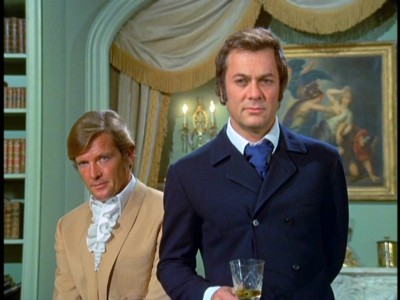
I am and will continue to be a huge fan of Tony Curtis. I especially enjoyed watching him in cult 1970s series, The Persuaders. I can highly recommend his autobiography, American Prince, though was suprised this made only passing reference to his role as Danny Wilde.

The Persuaders is a showcase of '70s style, offering the utlimate in retro interiors, alongside fabulously cool and funky fashions. Above all, Tony Curtis seemed to be perfectly cast as the dashing and stylish American playboy, who'd worked his way from the slums of the Bronx to the international jetset.


What I loved most about Curtis was his individuality and flair. Apart from his obvious good looks and curiously charismatic manner, he had cultural and artistic interests that reached far beyond the film industry and Hollywood. His flamboyant personal style was a reflection of his larger than life personality, combined with his uniquely arty taste. Towards the end of his life he was usually pictured wearing a Stetson hat and one of his many cravats.

Amongst the old records I've got stored away is a 45 rpm recording of the original theme tune to The Persuaders by John Barry. I'd love to listen to this again, but am currently without a record player (as I've mentioned over at The Dabbler).

I'm afraid we don't have any for sale at the moment, either... but there's a rather special book about Hollywood stars, with some lovely old photos of Tony coming to ShopCurious very soon.


Keep a look out, or sign up for our monthly Curious Cognoscenti newsletter to be the first to hear of new arrivals to the website.

Will you?

Monday, 20 September 2010

Earth, wind, fire and water (part II)

After my amazing trip down the river to reach the O2 Arena (see previous post), I didn’t think things could get much better. But I’d never experienced Earth, Wind and Fire live before.  I don’t really know too much about the band, except that they’re awesome musicians –  Daryl Easlea rightly describes their first album, That’s the Way of the World, as a ‘spiritual soul masterpiece’.

Oh, and they wear fabulous ‘70s style disco costumes. Or at least they used to. I found a few pictures of the group from the late 1970s and early ‘80s, when their look was a sort of tribal fusion – mixing funky African and American Indian influences with the Elvis-style flare-legged jumpsuit look (we’ve some similar vintage flares at ShopCurious).

Then I stumbled upon a breakfast television interview with members of the band, where they’re looking decidedly conventional. In fact, Ralph Johnson is actually wearing a suit!

I also recall a very curious piece of information relating to the band… When I was at university, one of my fellow students visited her doctor complaining of feeling depressed. He didn’t prescribe any drugs, but suggested that she should listen to as much of Earth, Wind and Fire's music as possible.
You may not be as devoted a groupie fan as I am, but I thought the concert was awesome. Here are some clips. The first video is of supporting band, The Brand New Heavies, who were pretty damned good too. After a while, my hands got a little shaky from holding the camera above my head for so long. But it’s worth persisting with the second clip to hear Philip Bailey and a curiously cool sax solo.


Anyway, if you were feeling a bit down, I hope you’re now a little more uplifted?

Are you?

Monday, 9 August 2010

Silly season curiosities - the Smiley ring


I was first introduced to Smileys in the 1970s when they came over to the UK as a novel curiosity from America. They soon became a universal symbol for friendship, happiness and peace – bringing with them the rather irritating strapline, Have a Nice Day!

In the ‘70s there were two main types of Smiley face fashion ring available. One was yellow with black markings for the eyes and smile. Some of these were ‘mood’ rings that changed colour according to how you were feeling. Hmmm...


The other was silver coloured and sometimes made from recycled cutlery. The original retro Smiley ring from ShopCurious (in these photos) may well have been created from a stainless steel spoon. It’s usefully adjustable, so should fit most fingers - or toes, if you're that way inclined.

At the height of the fad in 1972, apparently around 50 million Smiley buttons were produced. However, the genuine rings are now rather rare, so look no further if you’re after some inexpensive heirloom jewellery.


Anyway, the most comprehensive information I could find on the history of the Smiley appears in an early 2009 article about the film Watchmen, written by Jon Savage in The Guardian – and is recommended reading for the uninitiated.

Over the decades, the Smiley has had many incarnations from advertising campaigns to Acid House associations - and is now digitalized as the emoticon.

So, what d’you think of these perennially sunny smiling faces – quite cool, a bit of silly fun, or curiously sinister? Do let me know.

Will you?

Tuesday, 3 August 2010

Iconic decade of design revisited


'Retro style and design' is currently the name of the game. I certainly enjoyed travelling back to yesteryear for a blast from the past with a modern day twist, when I read a this ‘fab’ new book.

Dominic Lutyens and Kirsty Hislop have really captured the Zeitgeist of the seventies in their glossy tome – 70s Style and Design. Focusing on the key trends of the era, their book is a visual demonstration of just how vitally important the period was for the creative arts.


From pop art, post modernism (so that’s what inspired those chairs?) and derivative timeless style (think la Belle Epoque, The Jazz Age and the Surrealist movement) - to the origins of eco-friendly cool: this beautifully illustrated coffee table style bible of the 70s has them all.


With curiously appropriate 1970s style pull out pages, the colourful volume is a roll call of pivotal designers – and not just of fashion, but a lifestyle. Yves St Laurent, Vivienne Westwood, Zandra Rhodes, Bill Gibb, Biba, Laura Ashley and Fiorucci to name but a few – many of whom, as individuals or labels, are now making a comeback.


By the way, if you’re a lover of ‘70s style and design, check out the vintage shoes new in at ShopCurious, including the design shown left, from Biba (soon to be reborn at House of Fraser), and a highly collectable pair of de Havz by stalwart style leader of the ’70 and ‘80s scene, Terry de Havilland.


Anyway, as I was saying, if you'd like to see‘70s illustrations, magazine photos and some of the most amazing art, architecture and design of the day, this book is a must.

Of course, for all 40-60 somethings who lived through the decade, it’s essential reading and will bring back fond memories of peace symbols and liberation – both for women and men - plus platform shoes, floaty dresses, punk style piercings and uncontrollably contagious disco fever.


The ‘70s was a decade of many incarnations all rolled into one, and was hugely influential in terms of interiors and design. I think a similarly eclectic mix of styles is something we’ve also experienced over the past decade…

Do you?

Saturday, 10 July 2010

Popping back to happy days


Happy were the days when children needed no more than a seat at Saturday morning pictures and a bag of popcorn to keep them occupied. Pop art immortalized the popular culture and characters of the 1950s and ‘60s in all manner of colourful cartoon style images, reflecting the growing celebritization of film stars and artists, as well as an increased awareness of modern convenience products – along with our childlike curiosity for all things new.


As the pace of social and commercial change speeded up, those who had grown up in, or were inspired by distinctly more laid back times, found a role model in the character from Happy Days known as Fonzie (played by unlikely heartthrob Henry Winkler) – one of the most decidedly cool guys on the planet, who actively cultivated slow style to get things done more effectively.


Despite his James Dean style appearance and rebellious swagger, The Fonz was a big softy at heart and gained fans from all sorts of unexpected quarters. Old school French teachers even adopted his cult greeting (‘Eeeeeeeeey) to instruct pupils on the pronunciation of ‘e’ with an acute accent.

The Happy Days series was screened from the mid 1970s into the early 1980s and harked back to an age when family fun, fashion, movie stars and motorcycles were popular features of daily life. Curiously, little has altered in this respect, except that family structures and moral values seem to have changed dramatically within a relatively short space of time...


Perhaps that’s why slow retro style is regaining popularity and pop art accessories - like the uniquely stylish hand painted jewellery by the Maggio sisters at ShopCurious – are back in vogue.


Anyway, I’m looking forward to more Happy Days ahead.