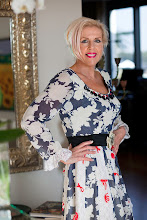
Love ‘em or loathe ‘em, fashion designers’ muses are often celebrity icons – actresses, singers, models, or well connected celebtocracy types. As Liz London’s pop-art style fashion muse inspired artworks are currently available at ShopCurious, I decided to take a closer look at the role of the celebrity muse.
Free clothing and accessories, plus masses of attention grabbing publicity are some of the perks of the muse’s job, but what must she (or, increasingly ‘he’) offer in return? Here’s my list of the top 10 requirements of a job spec. for musedom:
1) Beauty or aesthetic appeal
2) A ‘coat-hanger’ body to show off the latest designs
3) A large following, to get designs noticed
4) Wealthy friends, who might buy designer creations
5) Relationship issues – always good for extra publicity
6) A willingness to be re-styled every season
7) Some semblance of individuality for inspiration
8) An ability to walk in high heeled shoes
9) A good PR firm
10) A love of fashion, or a talented stylist.
We may well think it’s all air-heads and freebies, but celebrity fashion is hugely commercial, and even muses have to pull their weight (oops, did I mention weight?)
And, of course, there are some muses who fall outside this categorization - who have their own arty, eccentric, and curiously inspirational style, like the late Isabella Blow, Daphne Guinness and Lady Gaga.
Anyway, if you’ve got any additional points to add to the list, do let me know.
Will you?
Twitter Updates
Followers
About Me
- Susan
- Curiously crazy? Curiously creative? Curiously clever? A colourful curiosity? Are you curious?
My Blog List
-
dropshipper4 years ago
-
-
I'm back!12 years ago
-
New Word : ICONATOMY14 years ago
-
Total Pageviews
Links
- BLDG BLOG
- Cabinet of Wonders
- Colin McDowell
- disneyrollergirl
- Elizabeth Avedon
- Fashion Preserve
- fredbutlerstyle
- Godammit, I'm Mad!
- Lenorenevermore
- Luxe et Vanites
- Make Do Style
- Morbid Anatomy
- Nigeness
- Outsapop Trashion
- Pretty Portobello
- Profoundly Superficial
- Race Of Style
- Random Fashion Coolness
- ruminant
- Simply Healing
- Stella's Roar
- Style Bubble
- Style Porn
- The Spectator Arts Blog
- Think of England
- Thought Experiments
Tag Cloud
Style with brains.
Monday, 28 March 2011
Which muse to choose?
Monday, 21 March 2011
Vintage motherly style

For a curiously classic, grown-up look, there’s no accessory that signifies responsible, motherly style more than the traditional silk twill Hermes scarf.
Princess Anne has always been a fan and is often seen wearing one when cheering on her daughter, Zara, at show jumping events.
Margaret Thatcher used to be a great headscarf wearer too, especially when addressing a large audience at an outdoor venue.
Then there were the leading ladies – movie icons like Audrey Heburn, Brigitte Bardot and Grace Kelly, along with famous First Lady, Jackie Onassis. And not forgetting the most regal wearer of all – Her Majesty The Queen.
If you’re feeling particularly generous this Mothers’ Day, I can think of nothing more appropriate as a gift than one of the selection of collectable vintage Hermes silk scarves at ShopCurious.
You can always borrow it too - and if you don’t fancy the traditional look, there are plenty of other ways of wearing a scarf. Just make sure you remember to return it to Mum afterwards.
Will you?
Saturday, 19 March 2011
Divinely decorative

True religion is more than just a jeans label…As we increasingly find ourselves searching for meaning amidst the tumult of these rapidly changing times, more of us are seeking solace in some form of spirituality.
I’m always curious to learn about other people’s views on religion and have been fascinated to hear some of the recent speakers on Channel 4’s 4Thought TV. Being exposed to the wide ranging opinions of Scientologists, Islamic fundamentalists and devout Christians certainly broadens the mind.
What’s more, far from losing their meaning, traditional sacred icons, of whatever religion or denomination, seem to be becoming rather popular as decorative home or fashion accessories - which is why we’re offering these antique mother of pearl crucifixes at ShopCurious.
The one thing I can’t get my head around is why anyone chooses to fight over religion, when faith supposedly emanates from pure love. Perhaps we need to go back to basics and search for something a little more sacred within ourselves…
Will you?
PS Over at the Dabbler - read my post on Britain’s (neither divine nor decorative) local shopping centres.
Tuesday, 15 March 2011
Curious icons: the cult of celebrity

The earthquake and tsunami in Japan have suddenly put frivolities like fashion into perspective. This month my intention was to focus upon the links between celebrities, fashion, art - and religion... The 21st century has some curious icons, in particular, the new class of ‘non-ebrities’ - those famous for simply being famous.
A desire to make obscene amounts of money, together with relentless self-promotion, reality TV and the tabloid press have created unlikely stars, like Big Brother’s Jade Goody and I’m a Celebrity’s Jordan and Kerry Katona.
In November last year, a couple of aspiring US reality stars even gate-crashed President Obama’s first state dinner, posting photos of themselves on their Facebook page in a bid to garner publicity. The whole premise of reality TV is that it’s about real people, which means anyone can be a celebrity. But celebrity culture is founded upon narcissism, fed by devout materialism, and often fuelled by extreme ‘recreational’ drug use.
Anna Nicole Smith was similarly attracted by the lure of media attention and a luxury lifestyle – and eventually consumed by its trappings: junk food, sex, booze and drugs. The opera, Anna Nicole, with Eva-Maria Westbroek in the lead role, has recently been running at London’s Royal Opera House, to mixed reviews. I wasn’t wowed by the music, but the show is in equal measure entertaining, clever, funny, thought-provoking and sad.
Anna’s life was a tragi-comic Cinderella of a story. She started out as a waitress, married an 89 year old billionaire when she was 26, and went on to become the bloated laughing stock of reality TV - her sole ambition to ‘party to the end of time, party like primeval slime.’ Even her dog was on Prozac. She died penniless at the age of 39, shortly after the death of her only son.
Despite her childlike charm and celebrity aura, Anna was painfully insecure and easily manipulated by those around her, especially photographers, filmmakers and her lawyer-lover. She became a pumped-up puppet of the press – the living doll of media fantasy, not unlike her own idol, the ‘sacred’ screen star, Marilyn Monroe. (Anna Nicole was deluded enough to think she was the farmed-out child of Marilyn Monroe, even though Monroe died five years before Anna was born).![]()
It’s weird how celebrities have come to be idolized with almost religious fervour. This curious phenomenon has been captured with irreverent humour by Nathalie Queyraud, whose Defiles from Paris fashion icon rosary necklaces are now available at ShopCurious. Icons featured include Marilyn Monroe, Michael Jackson, Karl Lagerfeld and Marc Jacobs.![]()
Much like the operatic immortalization of Anna Nicole, these serve to remind us of our false gods. There’s even an icon of John Galliano, except we’ve decided not to offer this for sale. But have you ever considered that dictators like Hitler or Mussolini were actually ‘supreme celebrities’?
Anyway, rather than worshipping celebrities, why don’t we save our prayers for people who need and are worthy of them – like all those affected by the horrific disaster in Japan…
Will you?
Tuesday, 1 March 2011
Local icons with universal identity?

Happy St David’s Day! My grandmother, who sadly died years ago, was born in Wales, so I decided to explore my Welsh heritage. Welsh icons include leeks and a delightfully archaic national costume. But it’s not all coal, rugby, sheep and dragons in this curiously Celtic corner of our little island... There are also daffodils and lovespoons too - the latter being rather pertinent in view of Prince William’s impending nuptials - what with him being based at RAF Valley in Anglesey and next in line to inherit the heir apparent's title, Prince of Wales.
Possibly dating from the 14th century, and based on the ‘cawl’ or soup spoon, lovespoons were carved by young Welshmen to demonstrate their practicality and craftsmanship (much needed in rural Wales) to the father of their intended brides. The suitor carved one or more of a selection of traditional symbols to convey his special message:
Single Heart – My Heart is yours
Double Heart – Love is returned, we feel the same way
Celtic Knot – Everlasting
A Flower – Courtship
A Daffodil – Flower of Wales
The Dragon – Symbol of Wales / Protection
A House – My Home is Yours
A key / Keyhole – My Home is Yours
A Chain – Captured Love
Balls in a cage – Captured Love / Number of Children Desired
Heart Shaped Bowl – Fulfilled Love
Double Bowl – The Couple
Triple Bowl – The Couple and family
Vines – Growing Together
Horse Shoe – Good Luck
Bells – The Wedding
A Cross – Faith
A Ship – Safe Journey through Life
An Anchor – I Want to Settle Down
(List courtesy of Lovespoons Wales).
However, accepting this token of love was by no means an indication that a Welsh girl would marry her suitor - and some popular women amassed huge collections of lovespoons…
Anyway, I blame the Royal Wedding for my digression onto the subject of lovespoons, when what I really wanted to talk about is identity. These days it’s rare for us to identify ourselves with one particular place and culture. Most of us are a conglomeration of influences, ranging from birthplace and hometown to cities we’ve travelled to and people we’ve met. Our unique psychogeography and the individual stories that make up our lives have become more significant than our local origins.
Unlike lovespoons, today’s gifts and tokens of affection are more likely to reflect globally procured character – like the curiosity charm necklaces by Cartography40N74W at ShopCurious.
But might this curious trend lead to the wholesale globalization of culture, and what will the implications be for future generations? Or has the nostalgia-led backlash already begun? Your comments are most welcome, especially if you’re proudly Welsh.
Are you?
Saturday, 25 July 2009
The fashion for pop art

The term ‘pop art’ was first coined in 1950s Britain, but has become synonymous with American art that draws upon the popular consumerist culture of advertising and comic books. Pop art often portrays mass market iconic images of the 1950s and ‘60s and offers a bold, bright and outspoken alternative to traditional and abstract art.

Pop art also draws heavily upon fashion and style, from household branded goods to celebrity icons. We’ve turned this on its head by creating colourful fashion accessories with a pop art theme. Designed by the Maggio sisters and based on retro comic strip art, each of the handmade pieces available at ShopCurious offers a snapshot of its own unique cartoon style plot.

Wear one of these hand painted belts or necklaces and you’ll find that people are suddenly very curious to read the captions – so you’d better have a good storyline ready to tell them...
Do you?