![]()
On the eve of the Grace Kelly exhibition at the Victoria and Albert Museum in London, I thought it might be nice to take a look behind the scenes. It’s amazing that so many of the style icon’s clothes and accessories are still in such fabulous condition. A few, including the 1955 Oleg Cassini designed dress shown on the exhibition poster and book cover (see right), are no longer in existence. However, Jenny Lister, the exhibition’s curator, was given a choice from around 300 stunning dresses, largely because Princess Grace’s clothes were so well cared for and looked after at the Palace of Monaco.
In the interests of gleaning some hot tips on how to keep the ShopCurious stock in pristine condition, I was especially curious to know where and how the V and A’s highly prized antique costumes and vintage clothing are preserved for posterity. Rather like a big hotel, department store or hospital, a large part of any museum will never be seen by the general public. If you ever get the opportunity, it’s fascinating to explore the enormous back rooms, where so many of a museum's treasures are housed and maintained.
Getting into the costume stores at the V and A is rather like entering Fort Knox. Apart from the security procedures, there are also strict rules about how one should dress and what can be taken inside the temperature controlled rooms. Opportunities to handle the garments are restricted to key personnel, who must wear latex gloves at all times.
In the past, fashion has been kept at the museum mainly as a record of dress style through the ages. Historically, collecting art and antiques has been a predominantly male pastime - anything to do with vintage clothing was considered somewhat lightweight in comparison. In the 1950s and ‘60s, movie costumes weren’t thought to be that valuable and were often recycled, or purchased by stars, such as Grace Kelly, after filming was over. It’s only in recent decades that items of vintage clothing have become valuable collectors’ items in their own right – and film studios are scrambling to buy back the costumes they created decades ago.
For fashion pieces to be collectable, it’s essential they’re in the best possible, ideally mint, condition. The problem is that most fabrics are perishable and affected by wear and tear over the years – as well as being prone to attack by moths and beetles. For these reasons, all of the V and A fashion department’s items are kept in purpose built fridges, each numbered and marked up with details of their precious contents.
However, some garments, like this 1960s Mondrian inspired PVC dress by Stephen Willats, are probably less appealing to pests than others.
All potential exhibits are catalogued, (some more scientifically than others), for quick and easy retrieval, when necessary. Here you will find everything from Vionnet to Vivienne Westwood:
There are rare Fortuny dresses, beautifully made and embellished clothing and accessories from the likes of Schiaparelli, Dior and Balenciaga, curious retro creations by designers such as Mary Quant and Mr Fish - and extravagant celebrity gowns, like the Elizabethan sleeved, Liberty print Bill Gibb dress worn by Sandie Shaw (see below).


Upon death, most people’s old clothes are taken to charity shops, sold at auction or distributed amongst family members to be worn, or kept as heirlooms for future generations.
It’s great if clothing can be recycled and given new life in this way, but if you want your cherished vintage collection to be well looked after when you die, you might consider leaving it to the Victoria and Albert Museum.
I can’t guarantee you’ll be immortalized like Grace Kelly, but at least you’ll know your clothes will far outlive you.
Will you?
Twitter Updates
Followers
About Me
- Susan
- Curiously crazy? Curiously creative? Curiously clever? A colourful curiosity? Are you curious?
My Blog List
-
dropshipper4 years ago
-
-
I'm back!11 years ago
-
New Word : ICONATOMY14 years ago
-
Total Pageviews
Links
- BLDG BLOG
- Cabinet of Wonders
- Colin McDowell
- disneyrollergirl
- Elizabeth Avedon
- Fashion Preserve
- fredbutlerstyle
- Godammit, I'm Mad!
- Lenorenevermore
- Luxe et Vanites
- Make Do Style
- Morbid Anatomy
- Nigeness
- Outsapop Trashion
- Pretty Portobello
- Profoundly Superficial
- Race Of Style
- Random Fashion Coolness
- ruminant
- Simply Healing
- Stella's Roar
- Style Bubble
- Style Porn
- The Spectator Arts Blog
- Think of England
- Thought Experiments
Tag Cloud
Style with brains.
Friday, 16 April 2010
Preserving fashion forever
Friday, 10 April 2009
The Jazz Age
One of the best known flappers was the silent film star, Louise Brooks, whose first screen role was in a film called A Social Celebrity. Her brazen off-screen behaviour epitomized the vibrant spirit of the Jazz Age – a time when music and dancing went underground, accompanied by the illegal consumption of alcohol during the American Prohibition.
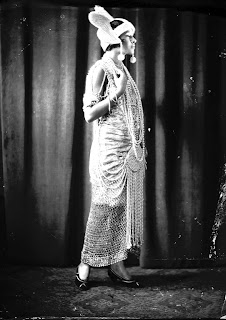
Another notorious star of the time was the flamboyant songstress Bee Palmer, whose ‘sinuous and suggestive’ dance style shocked audiences of the day and became known as ‘the shimmy’. Her unique theatrical costumes and flapper dresses were quite something, as you can see left.
We’ve got similarly show-stopping 1920s fashion at ShopCurious – take a look at this dramatic sheer and shimmering original wrap style evening gown – it’s a stunning work of art.
No reference to the Jazz Age would be complete without mentioning the literary genius F. Scott Fitzgerald (style with brains personified!) He and his wife, Zelda (left), defined all that was glamorous and excessive about the era - the lifestyle of the beautiful and damned, as immortalized through his poetic studies of the American Dream.
‘Can’t repeat the past?’ as Gatsby exclaimed ‘Why of course you can’. Well, you can certainly still buy and wear stylish vintage ‘20s clothing … and you can also enjoy the lively music that characterized the age. I was recently pleased to discover that Jazz FM is now back on the air as a digital radio station, so you can listen to it all over the world. I was so happy to hear the voice of delightfully down to earth DJ Robbie Vincent again after quite a few years – it made me smile all day long.
‘So we beat on, boats against the current, borne back ceaselessly into the past.’
Are you?
Tuesday, 24 February 2009
From greed to green

1) Greed - for those who like to feast with no shame ...
Nowhere is this more in evidence than at fashion shows. I was trying to avoid the media feeding frenzy that is London Fashion Week, but curiosity got the better of me: I was truly shocked by the astonishing greed for those front row seats (mostly nabbed by fashion students) and for luxury goody bags and freebies. Scary!
2) Gluttony - for those who want to scoff every last drop ...
Shrove Tuesday is also known as Mardi Gras, which means ‘fat Tuesday’ – hence the PR push today on anti-obesity/diabetics clogging up GPs’ surgeries? My TV has just painfully reminded me that some are as unnaturally superskinny as are supersize. Which do you err on the side of? Best eat up now, as we’re all going to have to tighten our belts soon anyway.
3) Envy - exclusively for everyone, but especially for the eternally miserable ...
Some are jealous of Kate Winslet, who received a rather valuable looking award the other day – great if she ever needs to melt it down, which might be likely sooner than any of us imagined possible.
Fashion, food, fame …
Who is paying for all of this overindulgence and are they likely to stop any time soon? And what happens when we can no longer afford to support the media? Perhaps it’s time for a re-think?
Why be green with envy for the celebrity-led, appearance-obsessed, designer-driven lifestyle. Why not simply be green? Live off your recycled belongings, wear vintage clothing, pawn your jewellery, buy handmade accessories, invest in timeless, collectable and iconic things for your wardrobe and home, learn to knit, use natural cosmetics, grow your own veg ... all very eco-friendly and what we at ShopCurious call 'style with brains'.
Once the dust of our depression has settled – probably quite a while after this Lent has come and gone, there will be a time for denial, recovery and, hopefully, change for the better. I understand that we aren’t allowed to pray any more, so I’ll make a wish instead.
Will you?
Sunday, 18 January 2009
Lounging around

The global recession means that most of us will be slowing down naturally, as well as of our own volition. It’s going to be a time when people will stay indoors more and enjoy themselves with friends and family – there’ll be less emphasis on material things.
I already mentioned a major trend is that we’ll be dressing up more, but there are two sides to this. On the one hand, we’ll be wanting to look our best to impress in the workplace, or to stand out from the crowd if we’re being interviewed for a new job: hence the sudden resurgence of 1980s power dressing.
We’ll also be needing the odd show-stopping outfit for special events when we do get to go out and seriously party. On these occasions, recycled vintage clothing, tasteful and timeless glamour will increasingly become more acceptable than flashy, one-season designer label.
On the other hand, a lot of the time, we’ll be aiming for comfort with style. Lounge pants – loose pyjama style trousers - have been popularized in recent years by college and university students the world over. Now they’re appearing more and more and have become something of an iconic fashion item.
The word ‘pyjama’ originally comes from the Persian word ‘payjama’ meaning ‘leg garment’. However, it was first incorporated into English from the Hindustani language. British men during the seventeenth century wore pyjamas as casual attire while relaxing. It was during the colonial era that the pyjama first became popular in the west as sleepwear. A Pyjama or a Pajama can be worn by either a man or a woman and usually means loose and comfortable drawstring pants, made of light fabrics. The sleeping suit variety of pyjama, as worn in the west, consists of a loose front-buttoned jacket and a trouser. However, these days, pajamas or pjs signify anything, from flamboyant beach trousers and funky catsuits to airy boxers.
At ShopCurious, we’ve some original harem style trousers that are really cool and stylish. They’re perfect for lounging around at home, but you could also wear them on holiday, or even to an informal dinner party - if you want to appear curiously exotic. They might also come in handy if you want to go into hibernation for the winter months, or at least for tomorrow – officially the most depressing day of the year.
Do you?
Friday, 31 October 2008
Classic twist
The best vintage clothing is typical of its era, but also has timeless appeal. The sort of things that are always useful to have in your wardrobe are well made garments with enduring quality and investment potential. You will need to consider the designer, the rarity of the item, the condition of the fabric, the workmanship and the provenance of each piece. There's also the wearability factor to take into account ... and some items of clothing simply never seem to go out of fashion. So long as your weight doesn't fluctuate, you observe the washing instructions and protect garments properly, you can go on wearing them until they fall to bits - like Mrs Haversham.

At ShopCurious, you'll find classic vintage clothing that is worth its weight in wool, silk and velvet. Take this fabulously stylish Jackie O-style suit, with its beautifully tailored velvet trimmed dress coat and matching figure hugging shift dress. The tweedy fabric looks like a sort of Prince of Wales check to me, but if you're knowledgeable about such sartorial details, perhaps you'd be so kind as to offer your expert opinion. I did read somewhere that the Prince of Wales check is a name often wrongly attributed to the Glen Urquhart check?

We've also got some wonderful 1980s vintage Celine - like this rear-buttoning printed silk top and a very fine wool double breasted trench coat with ample shoulder pads (for those into power dressing). Neither would look out of place today...

Nor would this glamorous Yves Saint Laurent sequined suede wrap skirt of a similiar vintage, or this forever classic vintage Hermes silk scarf.
There are other things that you can keep in the wardrobe for a few years and then bring out again... like this classy ladybird spotted silk 1980s Georges Rech cocktail dress. Perfect for Sloane Rangers wanting to save their pennies for other essentials - like champagne cocktails and seats at the opera.
Will you dahling?
Wednesday, 15 October 2008
Invest in the original

Back in what seems like the year dot – probably the early 1990s, Voyage opened a rather exotic looking shop on the Fulham Road. It was much talked about for its quirky door policy. Initially, if they liked the look of you, they let you in, but later on they issued cards and operated a strict ‘members only’ rule that famously excluded the likes of Madonna, Naomi Campbell and others.
I was one of the first regular customers - lured by the new and unusual nature of the clothing - which was totally different from the fashion of the day, with its power-shouldered, structured design. The prices were pretty toppish (that’s an understatement by the way), with tiny little cardies costing around £500 plus, figure-hugging long dresses at about £1500 and stylish coats up to £3500. However, all this paled into insignificance when offset against the reality of something that was completely unique, beautifully handmade and wildly trend-setting. What’s more, whatever the price-tag, Voyage also had the competitive edge of using old fabrics to create recycled clothing with a vintage feel.


Like many talented artists, the Mazzillis appear to have been challenged with the day to day business of budgeting and finance. I do recall writing cheques out to an establishment called Organic Clothing at one stage – all very progressive at the time – but an accurate description, since they were recycling vintage cashmere and silk, hand-dying the fabric and adding fancy trim embellishment to create individual and truly original pieces.
Tiziano and Louise Mazzilli were passionate about their work to the point of being slightly loopy. They virtually lived in their shop with their two young, charming and designer-named offspring: Rocky and Tatum. They worked with a close knit, probably poorly paid, group of artisans to produce the most wonderfully creative and unusual pieces that set the trend for silk petticoat dresses, velvet and marabou trimmed knitwear and comfortably creative clothing that endured for more than a decade. Or, have we just turned full circle?
The strapline that was added to later Voyage labels reads ‘Invest in the Original’. Only now am I beginning to realise just quite how original they were. At the time, all my friends, who were still wearing power suits and Chanel earrings, were appalled at the strange turn my taste had taken. For several years I was frowned upon when I rocked up in my double-layered flouncy dress-over-petticoat, tight fitting furry trimmed cardie and Prada wedges – or whatever Voyage’s latest collection dictated.
Of course, there were some who were also ‘early-adopters’ and shared my fondness for the label – like the youthful Jemima Khan and the late Paula Yates. Maybe the Voyage that became synonymous with being ostracised - for me, by the 'ladies that lunch' (I am eternally grateful!) and for celebrities, by the 'mad Mazzillis' - was actually the zeitgeist for the 21st century approach to dressing?


Now that Voyage is gone, the original is still available at ShopCurious. What’s more there’s plenty of lace, fringing, feathers and stuff that still looks current. And, of course, this is recycled not just once, but twice - so in today’s eco-friendly environment, it’s got added street-cred.
Do you?
Saturday, 11 October 2008
Banking on vintage
I recently met a lady who worked as a theatrical wardrobe professional for many years – amongst other things, she helped to create the costumes for the original Brideshead Revisited series. I asked her for her definition of 'vintage' and this was her reply: “Vintage is such a wonderful word because it describes anything that's not new, but that’s beautiful and that people would want to buy.”
I’m not the world’s greatest expert on antiques (which apparently means over 100 years old, according to some sources), but a lot of people ask me how the price of vintage clothing is determined. To be honest, I’d agree that, to a large extent, it’s all a matter of taste – the value is very much in the eye of the beholder.
I found this useful definition of vintage on the internet:"Stores featuring vintage clothing have become very popular in recent years, but many potential customers are curious about the difference between vintage and just plain old. Generally speaking, clothing produced before 1920 is considered to be antique, worthy of collecting or displaying in a museum but not for daily wear. Most clothing produced between 1920 and the late 1970s is considered vintage by most dealers, but some will extend this cut-off date to the mid-1980s. The term 'retro' is sometimes used interchangeably with vintage, but many vintage clothing stores only consider clothing of the 1960s and 1970s to be truly 'retro'. Clothing produced after the mid-1980s is generally considered to be bargain-priced or a charitable donation.
One of the few exceptions to the age rule is high-end designer gowns. One-of-a-kind designs by designers ... can be considered vintage after two or three years. In fashion, vintage denotes an exceptional example of period clothing, or clothing which still has some commercial appeal despite its age. Having a designer gown declared vintage is an honour for high-end fashion designers.
In most cases, vintage clothing is not less expensive to own than contemporary fashions. A pair of hip-hugging jeans from the early 1970s in good condition may cost twice as much as a brand-new pair of Levi's. Vintage clothing stores should not be confused with thrift stores. Selections at discriminating vintage stores are generally in excellent condition and carefully restored. Great care is taken to make sure the items are originals, not cheaper reproductions sold in general clothing stores. This is especially important when it comes to highly-collectable clothing."
All very interesting. So, if we were to apply a similar approach in terms of age to works of art, then I suppose modern pieces by Damien Hirst or Banksy would be the equivalent of recently made high end designer gowns?
There is certainly sense in:
1) investing in something that you really adore and don’t mind keeping hold of (better still if you can use, wear or even just appreciate it every so often) and
2) buying something that you believe has timeless style/artistic value/quality of craftsmanship, that might grow in value and be a good investment if you ever do wish to sell.
The whole idea that an item of clothing bought after the mid- '80s (or even last year) is worthless and fit only for a charity shop is, frankly, rather silly. Your clothes and what you do with them are simply a matter of your own personal taste and individual choice - and, of course, the value ascribed to them by you is probably different to what someone else is willing to, or can afford to pay - that's a matter of their taste, choice and spending power. The vintage clothing market is the place where people agree on a mutually acceptable price, according to subjective factors such as taste, style and uniqueness.
At ShopCurious, we’ve an extraordinary original, one-off made to order, knitted wool long dress by Julien Macdonald, that was featured in the Sunday Times Style Magazine on 19th September, 1999. You’ll find things for around £10 on our website, if that’s what you’re looking for, but we’re asking a cool £1,000 for this dress because it’s totally unique, (there’s not another in existence) and it’s a piece of vintage genius - a veritable work of art. What’s more, if you don’t snap this up, we’ll just hang on to it until someone else does.
If you’re ShopCurious, you might be inclined to buy it now as an investment for the future...
Are you?
Tuesday, 2 September 2008
Spanish rose


So we finally travel back to Europe to bring to an end our curiously circuitous trip along the Silk Route. We're just stopping off in Spain for a final glimmer of summer sunshine, a spot of flamenco dancing and a whiff of some late flowering Spanish roses.

Of course some parts of Spain are sunny all year round, like the Canary Islands. Perhaps that's why the Greeks and Romans called the archipelago the Fortunate or Happy Islands. Some historians believe that the legendary continent of Atlantis was located here.


On to the mainland for a bit more action. Flamenco combines dancing, singing and musical accompaniment. It possibly evolved from the music of Moslem Andalucia, during Medieval times, but developed into the dance of the gitanos or gypsies, the form of flamenco as we know it, from the late 18th century onwards. Of course, there's also a fair amount of fashion involved in flamenco. Traditional female flamenco costume is a fringed shawl, a long frilly flamenco dress (bata de cola), a fan and a flower worn in the hair.


At ShopCurious, we've got a wonderful selection of Spanish inspired vintage clothing and unique accessories for dancing (or dining, or just looking pretty). As well as our collection of original vintage silk scarves featuring Spanish tourist destinations, we've also a vintage skirt made of a recycled Spanish silk scarf with unusual hand dyed pale pink fringing. You might like to team this up with one of our selection of fans - this hand painted Spanish lace number should work perfectly - or it might make an unusual gift for someone who's visiting a hot country, who's a collector of vintage fans, or simply a lover of beautiful things.


To top it off, here's a stylish Spanish silk rose corsage, which you can use as a flamenco-style hair accessory, though this one can also be worn as a bracelet, or pinned to your dress. It looks as naturally beautiful as a real rose too - can you tell the difference?
All this talk of flowers is making me feel homesick. I know it's a bit sad, but I'm missing my plants! I'm curious to see what's happened in the garden whilst I've been away.
Are you?