http://www.ShopCurious.com/ http://twitter.com/ShopCurious
Showing posts with label design. Show all posts

Tuesday, 19 March 2013

Fashion Designs of the Year


The Designs of the Year 2013 exhibition opens at London’s Design Museum tomorrow. Now in its 6th year, the show is considered to be the Oscars of the international design world. A panel, consisting of respected members of the design community from a variety of disciplines, including museum curators, journalists and architects is asked to nominate projects, which then make up the shortlist. The overall Design of the Year will be announced this Friday. 

At the press launch, some of the jury members - Nicholas Roope, Griff Rhys Jones and Johanna Agerman Ross - posed alongside a life-size model of Yayoi Kusama, whose curiously dotty designs for Louis Vuitton are on the shortlist. Others on the fashion shortlist include the vintage Balenciaga-inspired Anna Karenina costumes, designed by Jacqueline Durra; Giles Deacon’s A/W12 womenswear collection; Craig Green’s AW12 collection; Prada’s S/S12 RTW collection, Proenza Sshcouler’s A/W12 collection, Comme des Garcons RTW A/W12 range and two short films directed by Lisa Immordino and Elisha Smith-Leverock.

Categories encompass architecture, furniture, digtial, graphics, transport, product and fashion. With 90 or so nominations, including Heatherwick Studio’s celebrated Olympic Cauldron, The Shard and a 3D printer, it could prove challenging to judge table and chair designs, let alone fashion accessories and items of clothing. 

Recent Central St Martin’s graduate, Craig Green, has won accolades from the press for the curiously unique designs in his MA Fashion graduation project (see below).


In this collection he plays with ideas of utility and function. Inspired by trompe d’oeil imagery and oversized luggage, huge architectural structures and geometric shapes dwarf the models to create eye-catching abstract silhouettes. In his catwalk show, models looked like nomads laden down with their luggage. For each patterned outfit, there was an extact replica in black, which walked behind the main garment on the catwalk to create a live ‘shadow.’ The large wooden structures attached to some of the garments are designed to symbolize religious pilgrimage.

Miuccia Prada’s collection, drawing on the theme of ‘sweetness’ and past generations was influenced by the 1950s style popular style, including car designs such as the Chevrolet. 


Vintage automobile-inspired designs see exhaust-pipe flames bursting out of the heels of shoes. This theme was carried across the whole accessories range.  

For Proenza Schouler, Lazaro Hernandez and Jack Mc Collough experimented with padding and quilting for their ‘protection’ ‘themed collection. 


They took inspiration from the Samurai, from martial arts like Kendo and from fencing. Their aim was to achieve a structured toughness, integrating modes of protection via intricately woven leatherwork and armour-like grids on bomber jackets, layered capes, skirts and boots.

Giles Deacon combined ideas of death with the exuberance and decadence of life to inspire his flowing torn silk gowns. 


His collection featured a theatrical series of delicately burnt and water-stained gowns and blouses, infused with gothic influences and an atmosphere of decaying opulence. Deacon wanted to convey the idea of a fire at an English stately home – which pieces would someone save in that situation? Fabrics such as Victorian style ivory silk, black velvet and chiffon with copper embroidery were burned by hand to reveal the layers underneath. His collection featured corseted gowns, high club collars and split-tailed jackets. Milliner Stephen Jones designed the headpieces, handcrafted from porcupine and ostrich feathers.

ShopCurious would love to know which fashion design you think should be the winner…


Tuesday, 29 January 2013

Ordinary icons? Stories of modern design


What started as a Boiler House Project in the basement of the V and A, organized by Design Museum founders Stephen Bayley and Terence Conran in the mid 1980s, was originally conceived as a pioneering ‘pop up’ museum.  But London’s Design Museum has ended up storing several thousand items, which will become a permanent display when the Design Museum’s new Kensington premises open in 2015. The entire top floor will be dedicated to icons of 20th century design in a free-entry exhibition.  Meantime, from tomorrow, a snapshot of the permanent collection that will be on show can be seen at the current Shad Thames location. 150 items from the Design Museum’s collection feature in the exhibition: Extraordinary Stories About Ordinary Things.


We mentioned the trend towards ‘immortalization through fashion’ in a previous Curious Trends post - and, for lovers of fashion, this show includes a sample of some of the 400 pieces donated by Design Museum trustee, Jill Ritblat. Her generous gift contains items by many of the world’s leading designers, including Karl Lagerfeld, Issey Miyake, Ungaro, Belville Sassoon and Vivienne Westwood, spanning a period from the 1970s to the end of the 1990s.


The exhibiton showcases an eclectic mix of artefacts, but the fashion pieces on loan for this show - including a Victor Edelstein satin brocade dress and a Jet Set of St Moritz ski suit - are fairly middle of the road in terms of style.

These aren’t necessarily the sort of designs that would have inspired or transformed the habits of a generation, unlike the original iMac, the red telephone box and the Bic biro, which are also featured.


At a press briefing, Design Museum Director, Deyan Sudjic, was at pains to point out that fashion isn’t just frivolous – it’s functional, and a contributing part of the economy too.  “Design is not the same as art,” he also said. So where does art stop and design begin… or vice versa. And what exactly is ‘design art’? I’m curious to know.


PS  Why not add to your own fashion collection with this curiously classic designer vintage Belville Sassoon dress from ShopCurious...

Saturday, 6 October 2012

Fashionably busy? Bring back the past...


“I do hope you'll offer some commentary on LFW. I feel somehow so out of the fashion week spirit this time around! I need a jolt of inspiration,” was Style Porn’s comment on my previous blog post. 

That was a few weeks ago. Since then I’m sure there’s been tons of coverage on every fashion week everywhere. I can’t quite manage to keep up. In the past few weeks I’ve been to countless fashion and design events in London and Europe, whilst continuing to follow what’s happening elsewhere in the world online.

Anyway, after a lecture earlier this week by Kerry Taylor (of whom more later) on 1960s style at the Fashion and Textiles Museum, I was inspired to take an online trip down memory lane.

Can’t repeat the past? But of course you can (see simple geometric prints and styles by MaxJenny above - and video below). 


And we should expect to see much more of then past, as the present becomes curiously complicated... and the future a little too worrying to contemplate.  Read our latest Curious Trends post for a taster of what's to come.

Will you?

To be continued...

Sunday, 9 September 2012

Goodbye to the Games...


I feel rather sad that the London 2012 Olympics are almost over – not least because the traffic in town will start to return to normal. It seems to have been remarkably light for the duration of the games, at least in the west of the capital.

But if you haven’t quite had your fill of sport this year, ShopCurious recommends another exhibition at The Design Museum:

Designed to Win runs until 18th November and is all about speed, power and performance. You’ll see everything from Formula 1 cars to designer training shoes, starting blocks, racing bikes and paralympic kit – including wheelchairs and running blades.


I won’t be too sad to say goodbye to these curious fellows - though I’m not sure who’s scarier in this photograph...

Are you?


PS If you're well and truly Olympicked out, why not join in our debate on monogamy and marriage over at The Dabbler.

Tuesday, 4 September 2012

Digital experiments with crystal


An exciting new exhibition opens in London tomorrow, focusing on the changing nature of our relationship with objects over time. ShopCurious takes a tour of Digital Crystal: Swarovski at the Design Museum in our latest Curious Trends post. Meantime, here are a few taster images of some of the designers with their exhibits, photographed by David Levene for Swarovski.
Pandora by Fredrikson Stallard
Blur by Philippe Malouin
Holo Center Table by Marcus Tremonto
The Monument by Hilda Helstrom
Osmosis Interactive Arena by Arik Levy


By the way, there’s a lot more to see at the Design Museum.  It’s all good - and definitely worth a visit.

Will You?

Tuesday, 14 February 2012

Let's fall in love...

Happy Valentine’s Day!


It’s funny how parents explaining the 'facts of life’ to their children are said to be talking about ‘the birds and the bees’. Especially as birds hatch out of eggs, and bees don’t even indulge in sexual activity as we know it. Bees provide a very curious model for adolescent love. According to Bee Wilson, author of The Hive: The Story of the Honeybee and Us, “all the (bee) boys want to sleep with a single girl, but the only ones who manage to do so are castrated and killed in their moment of success, while everyone else dies a virgin.”

I was surprised to learn that the sex life of bees remained a mystery for centuries and was only gradually unveiled in the eighteenth century. Bees are surrounded by honey, yet appear to be immune to the temptation of its sweetness. Perhaps this is why honey is found in celebrations of both sexual ecstasy and chaste worship?

For medieval Christians, bees came to represent the unique combination of productivity, order and chastity, towards which the monastic life aspired. And wax came to symbolize the most significant chastity of all: that of the Virgin Mary. Meanwhile, Kama, the Hindu god of love who gives his name to the Kama Sutra, is often shown riding on a sort of bee-cum-lion creature. This strange beast also appears on the side of honey jars in India, where the bee symbolizes the sweetness of love, as well as its sting. And the earliest stories of Cupid in the 5th century BC had him stealing honeycomb.


Then there are words like honeytrap – a way of snaring someone using sexual espionage or blackmail. And honeymoon. It’s said this may refer to the Viking custom whereby the bride and groom ate honeyed cakes and drank mead for the first month of their betrothal. But honey appears in the marriage rites of many cultures. Even today, in Morocco, the newly married groom is supposed to feast on honey for its aphrodisiac effects. And in Bulgaria, wedding cake with honey is rubbed over the face of the bridegroom.


Never mind their declining numbers, it’s no wonder bees have been getting so much publicity lately... If you’re bitten by the bug, you can try out beekeeping for beginners at the Chelsea Physic garden. Or alternatively indulge in some delicious English honey from Littleover Apiary. You can also read more about bee inspired product design in ShopCurious’s latest Curious Trends article. Or simply take inspiration from the famous Cole Porter song... birds do it, bees do it, even educated fleas do it, let's do it, let's fall in love.

Will you?

Saturday, 7 January 2012

Retro design revival goes analogue


The other day I spotted a rather curious biscuit tin at Sainsbury's. The lid was painted to look like an old fashioned radio.


I guess it’s all part of the latest retro-progressive, analogue-inspired design trend – as reported in ShopCurious’s latest Curious Trends post.


Read more about analogue design in my post at The Dabbler, where I consider the advantages of vintage versus digital television sets...

Will you?

Monday, 10 October 2011

Weaving life's rich tapestry


Have you noticed how old fashioned handicrafts like needlepoint and lacemaking are coming back into vogue lately? I’ve spotted embroidery, crochet and patchwork everywhere from art galleries and craft fairs to niche boutiques and trend-setting chain stores.

Another curious trend is that tapestry is becoming rather popular, not just for wall-hangings, but also as fabric to cover furniture and cushions.


The practice of weaving is said to be meditative as well as enjoyable, perhaps that’s why it’s become fashionable again recently? However, traditional weaving is not so much ‘make do and mend’ as DIY manufacture. There’s a real art to creating your own textiles – and don't even bank on saving money in the process…

Nevertheless, one way of cutting your coat to suit your cloth (sorry) is to purchase a second-hand loom. And, if you’re tempted to master this rustic craft, we may have just the thing at ShopCurious – a Glimakra Ideal weaving loom, which we’re selling for less than half the current market price.


If you’re already skilled at producing your own unique, homespun creations (like Edward Taylor, whose handiwork can be seen above right), this could be a curiously useful purchase - or even an investment towards your future in sustainable design. If not, you can find some lovely vintage tapestries at specialist galleries, or antiques fairs (see above left).

By the way, any weavers reading this post are invited to share their work by adding a link in the comments below.

Will you?

Wednesday, 20 July 2011

Fashionable fine art...


Despite the contemporary design of its Chelsea home, Heatherley’s School of Fine Art is fairly traditional in approach – at least that’s the impression I got from my visit to preview the Annual Exhibition, which starts today. I was invited by my neighbour, Patrick Earle, who has just completed a portrait diploma at London’s oldest independent art school. His works stretch the boundaries of Heatherley’s tried and tested painting techniques to handsome effect. Amongst his exhibits, Earle bares his soul in a curiously clever self portrait - inviting us into his inner world, to share his absorbing love of painting.


Even further removed from a prescribed formula, and closer to fashionable trends of the art and design world, is a series of works by Caroline Weir. Combining found objects with musical forms, old dolls, bones, skulls, anatomical specimens and charred embers, Weir has captured a number of current themes.


She’s even created a rudimentary automaton called The Tapper, which brings to life an old 'cello case.

ShopCurious particularly likes Hell’s Kitchen, which showcases Weir’s accomplished ceramic sculptures in conjunction with a retro cooker… and Tabasco Sauce bottle.


The show is open until Saturday 23rd. Do get along to see it.

Will you?

Saturday, 9 July 2011

Festival of fashion and design


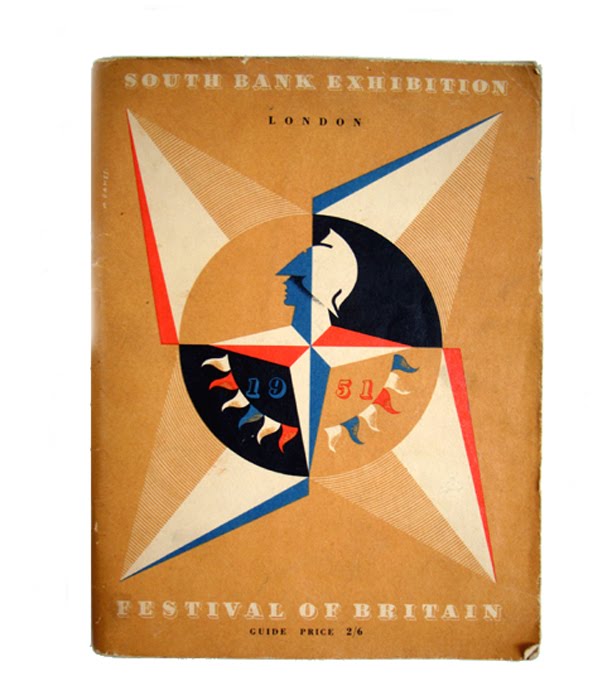
ShopCurious recently acquired a copy of the original programme for the 1951 Festival of Britain. It’s packed with colourful advertisements placed by booming British businesses of the era.

I’ve picked out a few of the ads, mainly featuring fashion and design, just so you can see how things have evolved over the years...


Technology may have advanced, and social structures been broken down by massive changes, but have you noticed that fashion and home furnishings are looking curiously retro of late? I wonder if the way we run our businesses and conduct our relationships will also become increasingly inspired by the styles of a bygone era?

Do you?