Twitter Updates
Followers
About Me
- Susan
- Curiously crazy? Curiously creative? Curiously clever? A colourful curiosity? Are you curious?
My Blog List
-
dropshipper4 years ago
-
-
I'm back!11 years ago
-
New Word : ICONATOMY14 years ago
-
Total Pageviews
Links
- BLDG BLOG
- Cabinet of Wonders
- Colin McDowell
- disneyrollergirl
- Elizabeth Avedon
- Fashion Preserve
- fredbutlerstyle
- Godammit, I'm Mad!
- Lenorenevermore
- Luxe et Vanites
- Make Do Style
- Morbid Anatomy
- Nigeness
- Outsapop Trashion
- Pretty Portobello
- Profoundly Superficial
- Race Of Style
- Random Fashion Coolness
- ruminant
- Simply Healing
- Stella's Roar
- Style Bubble
- Style Porn
- The Spectator Arts Blog
- Think of England
- Thought Experiments
Tag Cloud
Style with brains.
Saturday, 3 November 2012
Fashion's hairy moment
Saturday, 1 September 2012
A winning wardrobe
I haven’t watched any of the Paralympic Games yet, but I hear we’re winning lots of medals. On the night of the opening ceremony, I was out at an event launching something entirely different – the new BuyMyWardrobe pre-loved luxury designer fashion website.
I stayed long enough to hear owner, Kai's speech about the "luxe recycling revolution," and to do a little bit of networking.
I met the lovely shoe blogger Sabrina Johnson of Sabrina Suggests and bumped into Stella of Stella’s Wardrobe (check out the cute new illustrations on her blog).
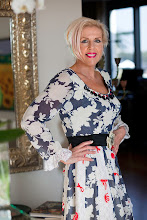
In honour of our paralympic athletes, I thought I’d wear my Union Jack dress, teamed up with a recycled vintage bag from ShopCurious. I wasn’t the only one dressed patriotically: A curiously charming kilt-wearing milliner insisted on having his photograph taken with me.
Then I dashed home to catch the remainder of the Paralympics opening ceremony. Read my review (including views on the Paralympic uniforms) in today’s post at The Dabbler.
Will you?
Thursday, 28 April 2011
When fashion warrants royal approval...

Sir Norman Hartnell (1901-1979) is probably the most famous royal fashion designer to date. He was responsible for the revival of the crinoline, after Queen Elizabeth The Queen Mother caused a sensation wearing the new silhouette on a state visit to Paris in 1938. Of course, Hartnell also created Princess Elizabeth’s wedding dress, as well as the gown for her Coronation as Queen in 1953.
The couturier's streamlined, heavily jewelled, fitted dresses became firm favourites of film stars and actresses, as well as the aristocracy. And, as it happens, Hartnell's 1938 Spring collection wouldn’t look out of place today:

With just two days to go to the Royal Wedding, you may be wondering how to accessorize your outfit for the auspicious occasion. ShopCurious has just the thing – a Fake London limited edition royal print wrap-scarf, featuring a curiously elegant illustration of a royal dress design by Norman Hartnell. The couture gown in question looks as though it may be the one Her Majesty is wearing in the photograph above, taken on a royal visit to Ghana in 1961.

Norman Hartnell received a Royal Warrant for his services as royal dressmaker from 1940 onwards…not unlike the curious warrant awarded to Fake London as suppliers and manufacturers of knitted merkins to Her Gracious Majesty the Quirk.

Anyway, herewith sending best wishes to William and Kate for their wedding day… Let me know if you’re doing something special to celebrate the event.
Will you?
Thursday, 23 September 2010
Superstar v Supersloane style
Nowadays we have style icons, but a few decades ago they were still ‘heroines.’ The Princess of Wales became the ‘Supersloane’ heroine of the 1980s. Her transformation from the bashful Mark II Sloane Ranger ‘Lady Di Look’ to English romantic taffeta-clad Mark I style was amusingly documented in ‘80s style bible, The Official Sloane Ranger Handbook (intriguingly subtitled The First Guide To What Really Matters in Life).
BC, before Charles, Diana wore the Young Sloane wardrobe, central to which were granny’s pearls and “ruffled shirts with ribbons at the neck”. We’ve an original 1980s example at ShopCurious, made by fellow heroine of Wales, Laura Ashley - the designer behind the popular homespun look of the day. In fact, as sales of her Victorian and Edwardian inspired floral dresses and frilly bow tied shirts rocketed, Ashley also underwent something of a metamorphosis from small time dressmaker to international business woman.
What’s so curious about British heroines of the early ‘80s is that, despite increasing power and presence within the workplace (think Margaret Thatcher), they still deferred to time honoured, traditional values and maintained their ladylike propriety. Lady Di stayed well out of the press until 1980 – she was ‘never café society.’ And Laura Ashley never courted attention for her success in the competitive world of high street fashion.
The Princess of Wales, or PoWess (pronounced Powys) and her Laura Ashley style were much emulated by young girls, especially in the UK, but farther afield too. Her sensible Pearly Princess, fresh-faced, effortless look and impeccable manners (instilled by a nanny) commanded the respect of young and old alike.
As we know, Diana retained her individuality, but in an appropriately retro-progressive way: “Like many of her contemporaries – flat sharing SW7 and SW10 girls under 20 – she did the old things… but with a new flair.” Initially at least, she stuck to the rules, and everything seemed hunky dory and everyone seemed reasonably happy…
Now there don’t seem to be so many rules. British society is much more of a free for all. Pink cheeked, naturally buxom country girls have gone all beer-bellied, teeth whitened and tattooed. Their dream goal of marrying Prince Charming replaced with a burning desire to appear on the
But have we started looking back to the past again, with the current revival in all things homespun and vintage? Kate Middleton certainly has some genuine colour in her cheeks and seems suitably un-cool, old fashioned and demure, like a proper lady.
But whilst Kate may be a Supersloane heroine in the making, perhaps it’s iconic celebrity style we still seek to emulate…
Anyway, what really matters to you? Do share your thoughts and comments...
Will you?
Saturday, 28 August 2010
Designer books - a curious new fashion trend

We haven’t heard much from Mr McDowell lately – perhaps he’s away on holiday, or working on a new book. Colin McDowell’s thought provoking posts are a far cry from your average fashion blogger’s fantasy affairs, which I suppose is what comes from being one of the most knowlegeable and eloquent fashion journalists in the world.
Here’s a snippet from one of his more recent posts:
“It seemed natural after all that to set off up Fauborg Saint-Honoré and hit the shops. My two male companions were in crazed must-have-it buying mood and egged each other on to buy … anything as long as it had a scary price tag, which meant everything, in fact. Respectively they bought a denim shirt and a pair of trainers (at a cost of over €700) and a pair of trainers and drop-crotch pants (close to €1000), all of which will be totally out of fashion in a very short time. Which is what being a fashion person is all about.”
Colin, I agree. It does seem that for many of us, ‘fashion’ has become a byword for overpriced designer label goods. What’s more, the strong pull factor of branded fashion in popular culture has got everyone trying to cash in on the latest faddish trends...Is brown the new black? Is short the new long? Are books the new trainers?
Come to think of it, astonishingly expensive designer books, a sudden demand for built-in libraries, ‘bibliotherapy’, book inspired artworks and home furnishings are just a few of the curious trends spotted by ShopCurious lately. I know we can't wear books, but expect to see book print fabrics, book inspired accessories and all manner of bibliomaniacal creations on the catwalk.
Oh, and over at The Dabbler, you can find out what us retro-progressive types make of stylized new additions to the book world.
Anyway, I guess it's all good news as it means we’ll be reading more... so I hope you’re feeling suitably bookish?
Are you?
Monday, 16 August 2010
Quite contrary: Curious gardens and bustles
Bustles are curiously unique fashion features. You don’t see many these days, except at weddings, or occasionally as costumes in Victorian and Edwardian period dramas, or gothic horror films. However, the other day I was driving down the North End Road in London’s Fulham, when I spotted a young woman, with a pushchair, wearing a full length skirt with a large bustle. The immediate thought that came to mind was that she must be a fashion designer, or perhaps this is a curious new trend?

Bustles have appeared on catwalks over the past couple of decades – notably from the likes of Vivienne Westwood – but unless worn for a grand occasion, or by those with a penchant for neo-Victorian Steampunk style, they’ve been seen as little more than an avant garde stylistic diversion. Recently, more mainstream, toned down versions of the bustle have been popular sellers at outlets like All Saints and online, at ASOS.
They’re probably not so great for gardening in, but I wonder if we’ll start seeing the full length, Victorian style bustle skirt walking down the high street soon...
Do you?
Tuesday, 27 April 2010
Biba's everlasting appeal

Little did the architects of the Big Biba store in London’s Kensington High Street know they were helping to create a legend. During its brief existence from 1973-75, the opulent emporium was hailed as ‘the most beautiful store in the world’.
Even Mr Al Fayed would have been impressed with the shop’s extravagant Art Deco interior, which was reminiscent of the glamorous, golden age of Hollywood.
Big Biba wasn’t just about style – it was the first lifestyle store. Here a young girl could “buy not only a new wardrobe, fully co-ordinated from head to toe, but also a complete range of cosmetics and soft furnishings, together with the washing powder to care for her clothes, and food to go with it, all presented in the distinctive Biba packaging.”
Alternatively, she could lounge around in the shop-windows (as Biba didn't have window-displays), or sip cocktails upstairs amongst the flamingos that lived in the Roof Garden, or in the Rainbow Room, where live music was performed.
'Biba style' was characterised by flowing lines, floppy hats and… pickled onions! For all it’s curiously cool, stylish charm – Biba was peculiarly quirky and eccentric: Even the food hall displays were in the shape of baked bean tins and Campbells soup cans. But it was the Biba logo that was immediately recognizable on the vast majority of the products.
Biba also produced a mail order catalogue, with girls wearing the complete Biba look – from clothing to makeup and accessories. The Biba look consisted of what Hulanicki called "Auntie colours" - which she said ‘look like a funeral.’ The predominant shades were blackish mulberries, blueberries, rusts and plums.


If you’d like to see more of images of the store and Biba’s designs, how about this fabulous, collectable coffee table book from ShopCurious. ‘Welcome to Big Biba’ features over 150 colour photographs from the seven storey department and is signed by designer, Barbara Hulanicki herself, as well as the book’s creators.
In addition to selling stylish fashion, Big Biba was a social network and curiosity shop all rolled into one. I have a feeling the legend will live on and on... I'm curious to experience Biba’s next incarnation – and see the website.
Are you?
Tuesday, 13 April 2010
Castaway couture, or wot?

Entrepreneurs, senior executives and trade bodies representing the luxury goods industry will meet in Barcelona tomorrow for the 12th Annual Prestige Brands Meeting.
Europe has always been considered the main producer and market for premium products, with European brands accounting for around 75% (approx. $229 billion) of the global luxury market, according to figures from the Boston Consulting Group.
However, the Financial Times reports serious concern regarding the erosion of specialist skills such as dressmaking, watchmaking and perfume creation in the European luxury goods sector, combined with a shift in production to emerging markets in Asia and eastern Europe.
Guy Salter, deputy chairman of Walpole, the British Luxury alliance claims that “All young people want to be designers and very few, makers." He says, "We want to try and change that by promoting craftsmanship in the luxury sector" adding, by way of example, "only a handful of small manufacturers in the UK are now making bags and leather accessories, compared to over a hundred factories only fifty years ago."
Some brave souls are already taking their own action to help preserve traditional skills and crafts for posterity, amidst a rapidly changing global marketplace. StyleCurious featured Mark H, a personal victim of UK manufacturing's demise, has made it his mission to turn adversity to advantage in a bid to save British craftsmanship from extinction.
Mark says, “There are still people alive, but only just, who remember England as the Workshop of the World, making everything from corsets to a silver condiment train for the Maharaja of Jaipur.” He adds, “We were busy making things: inventing, tweaking, fumbling, making fools of ourselves – the world’s eccentrics – in garages and small workshops all over this green and pleasant land. To achieve a Royal Warrant to supply members of the British royal family was a licence to export products to every part of the globe.”
In order to help prevent the UK’s industrial heritage from being totally “squandered”, Mark decided to establish his own curiously eccentric new luxury brand called OR WOT! to capitalize on ‘the finest components, skills and crafts that England can muster.”
The story behind OR WOT's ‘Castaway Couture’ collection is highly symbolic. Mark imagined the only survivor from a luxury British cruise ship, marooned on a desert island. Key pieces in the collection are inspired by the survivor's luggage, together with flotsam and jetsam from the shipwreck and the animal and reptile life on the island.
An eclectic range of handcrafted luxuries for him and her, plus a selection of beautifully handmade curious gifts and things for the home by OR WOT! is now available exclusively at ShopCurious.
Each product is made in England, has its own tale to tell and is intended to be a family heirloom that will last for generations to come. What’s more, the skill and craft involved in the making of every single item will be passed on to future generations too.
Curiously crazy, curiously clever, OR WOT?
I'm curious to know what you think.
Do you?
Friday, 9 April 2010
The immortal style of Hardy Amies

Sir Hardy Amies, who passed away in 2003 at the age of 93, is said to be the longest living fashion designer, even outliving Coco Chanel, who died aged 88. Amies’ style is synonymous with timeless elegance, and is immortalized in the classically decorated, chandelier and mirror filled interior of his Savile Row premises – now a museum and archive in tribute to his memory. I was recently fortunate to catch the end of an exhibition held at the magnificent house, celebrating 100 years of Hardy Amies.
As well as vintage designs by Amies, the show featured personal memorabilia, including photographs of family and clients, sketches, fabric swatches, mementos of events and original ephemera from his years living and working in the rarified world of haute couture.

Best known for being designer to Her Majesty, Queen Elizabeth II, Sir Hardy was patronized by an international clientele that included royalty, film stars and the aristocracy.

Located in a street world renowned for men’s tailoring, his business served both men and women, and was very much the English equivalent of a traditional French couture house.
However, Amies was also involved with the production of rather less glamorous ‘utility clothing’ during World War II, eventually becoming Chairman of the Incorporated Society of London Fashion Designers. He was commissioned to create quite a number of uniforms as well, including this one for the airline BOAC.
Incidentally, the books you can see behind this mannequin are a complete set of original copies of Vogue Magazine, dating back to 1945. Apparently, the only other collection of this type is to be found at Vogue’s offices, but that is kept under lock and key.
My visit to the exhibition was by way of a reception, hosted by Fashion Group International (FGI), which has recently re-launched in the UK and is currently recruiting new members. Here are some photos from the event – including one of photographer, Mario Rebelo, alongside the Evening Standard’s outrageously dapper Maurice Mullen.
And here am I wearing a suitably eclectic mix of lovely tights by Bebaroque, plus vintage beaded bag, asymmetric quilted dress by Emma Cook and necklace from Biba (along with my cheap-but-chic chain store shoes). The fabulous hair accessory is made using recycled vintage jewellery, from a collection that will be available at ShopCurious later this month.
For more information about future events, plus some charming personal insights into the house of Amies, watch this short video of the speech given by FGI’s Janine Roxborough Bunce:


And, if you’re a fan of stylish, beautifully made, classic clothing, look out for our Hardy Amies giveaway – coming up very soon.
Will you?